Background of the Study
During that brief two-year superhero cartoon buzz, one of the big pushers of the genre was Hanna-Barbera, who seemingly had a hit with their series Space Ghost & Dino Boy in 1966, and so in 1967 managed to produce a half-dozen new shows in a similar vein (it makes more sense when you consider that they were making cartoons for all three of the big networks at the time, but it’s still a lot.) Almost none of them lasted for more than twenty episodes, although it’s hard to tell if it was because of that anti-violence backlash or just Hanna-Barbera’s typical cut-and-run style of production. As surprising as it may sound for a company not known for originality, H-B did try to find ways to differentiate all these shows from each other, leading to a decent variety of settings and concepts— from that we got our present subject, The Herculoids, whose distinguishing element was that the titular heroes were a team of monsters (with a human family guiding them) protecting their extraterrestrial home from various generic sci-fi threats. This series aired eighteen episodes (thirty-six ten-minute segments) and then halted, but it had enough of an impact that it was briefly revived in the early eighties, alongside Space Ghost, as part of the package series Space Stars. The characters of Herculoids have made cameos or been referenced in later Hanna-Barbera-related series, especially Adult Swim stuff like Harvey Birdman, Attorney At Law (coincidentally, the original Birdman series premiered at the same time as Herculoids), so I had some knowledge of the series through cultural osmosis, and its concept would obviously intrigue me—its combination of a “primitive” setting with science fiction, and its clear appeal to kids who were in the midst of a kaiju renaissance in the mid-sixties, is both completely of its time and also still fairly unique.
Literature Review
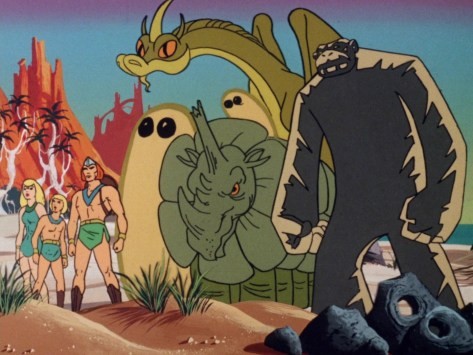
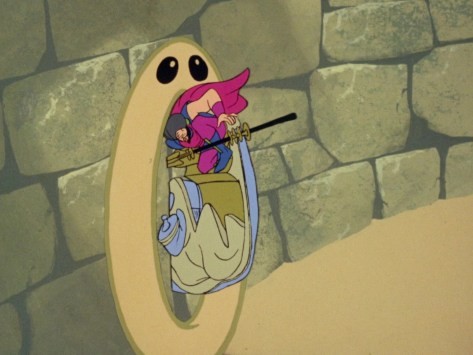
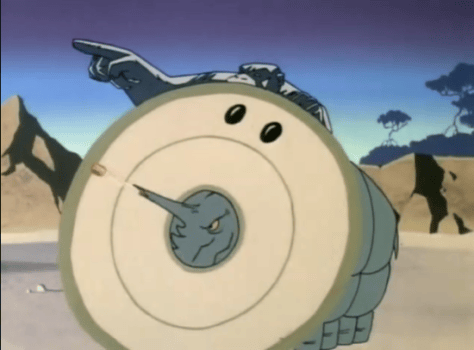
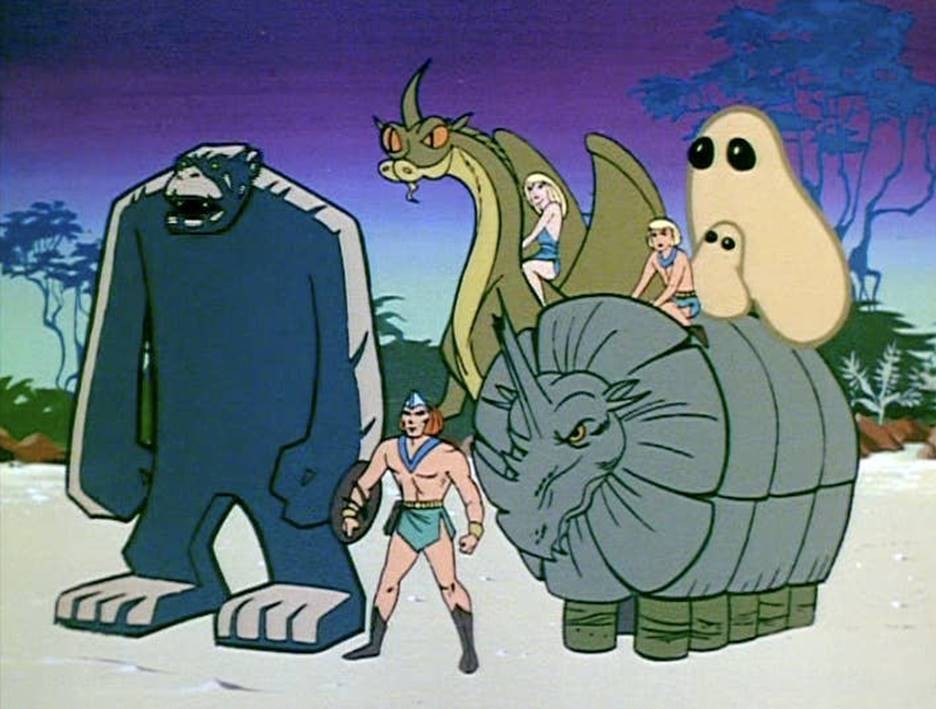
The series takes place on the mostly undisturbed natural beauty of the planet Amzot (renamed Quasar in the eighties episodes, probably because they forgot the name), where the pseudo-barbarian nuclear family of Zandor, Tara, and their son Dorno hang out with their cool monster buddies: the “rock ape” Igoo, the many-legged triceratops-like Tundro, the “laser ray dragon” Zok (whose other defining trait is SCREAMING, CONSTANT SCREAMING), and the morphing blobs Gloop, the larger one, and Gleep, the smaller one. They would all be content to chill in their giant, retro-sixties alien treehouse if not for the near-endless supply of technology-wielding alien intruders who invade their space and harsh their buzz, which in turns leads to action, adventure, and a tremendous number of explosions. There’s an interesting, unspoken nature vs. technology angle to this set-up: Zandor (whose name was originally Zartan, an anagram that tells you exactly what his inspiration was) and his human family don’t necessarily abhor the future tech they see, and apparently are knowledgeable of it (they can pilot spaceships and identify a time machine on sight somehow), they just choose to live a back-to-the-land kind of life, and they oppose those who try to exploit their environment or their monster friends, whether those are Space Romans who force the Herculoids to take part in their gladiatorial games, or militaristic aliens who want to use their planet as a missile launching base. If you really want to project some retroactive historical meaning onto it, you could see it as a group of Sci-Fi Flower Children taking it to the plundering forces of modern civilization, a reading that almost certainly was not intended by its creators.
This series had contributions from many of the big names at Hanna-Barbera in the sixties—it was made at a time when William Hanna and Joe Barbera were producing AND directing their own cartoons, and also features the late Ken Spears and Joe Ruby (co-creators of Scooby-Doo) crafting the stories, regular composer Ted Nichols creating the jazzy score, voices provided by mainstays like Don Messick, and the classic Hanna-Barbera sound effect library in full force. Most essential of all, though, is series creator/character designer Alex Toth, a celebrated comics artist and the creator of Space Ghost—I doubt the series would be half as interesting without his inventive, streamlined designs. As with the iconic design of Space Ghost, Toth does a lot with straightforward use of shapes and colours, a pop art style that is decidedly sixties but also manages to be appealing even fifty-odd years later. In the book Alex Toth By Design, Toth writes that “Because of the far-out, comic bookish characters, sets, costumes, hardware, otherworldly Sci-Fi/spacey content of our shows, I approached the designs as abstracts…Many stories were derivative—so the memory banks were tapped to draw new variations of the old.” This philosophy is readily apparent in The Herculoids, and is likely why I found it was still entirely watchable.
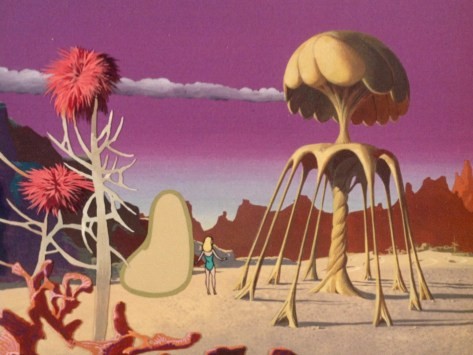
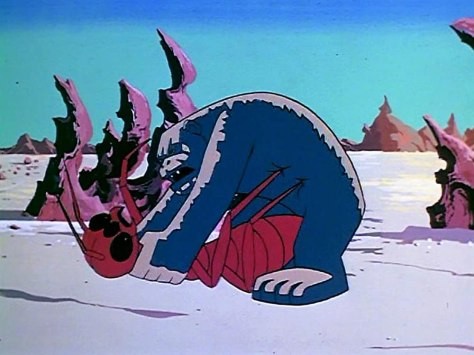
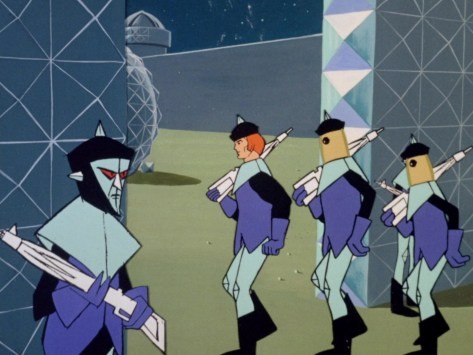
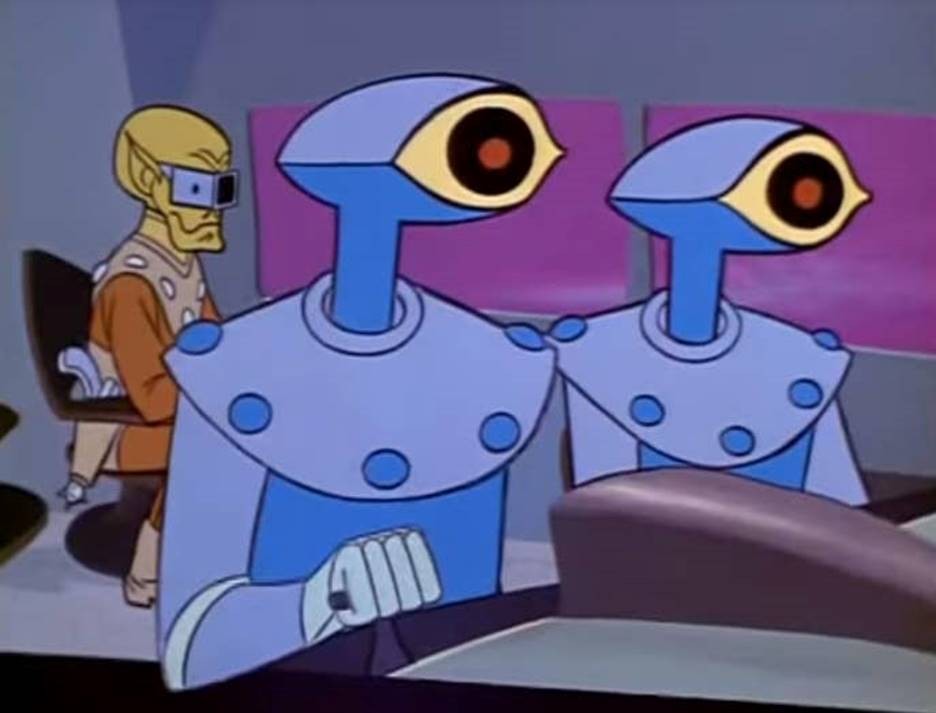
The Herculoids themselves cover most of the essential monster idea bases, each one highly distinct visually within the group, and equal parts fearsome and friendly in appearance. A design like Igoo, whose features look like they’re constructed from shadows, is immediately recognizable, so the animation’s inability to stay on-model for more than a minute doesn’t affect it much (Gloop and Gleep sidestep that issue by being formless blobs who don’t have much of standard model to stay on—I’m sure the animators appreciated that, and so almost all the best pieces of animation are given to those two.) Even the villains and monsters of the week have slick, appealing designs—in one episode, the Herculoids fight evil robotic duplicates of themselves that look absolutely adorable—so while none of them will likely stick with you for more than a episode, you enjoy watching them for that episode, at least. Combining those designs with the colourful background art creating the archetypal alien planet, this has an aesthetic you can appreciate even if the animation itself isn’t particularly impressive.
https://www.saturdaymorningsforever.com/2015/12/the-herculoids.html
Significance of the Study
The Herculoids
The Herculoids took place on the faraway planet of Amzot and followed the adventures of a group known as the Herculoids, led by the human warrior Zandor. Alongside him were his wife Tara, their son Dorno, and five native creatures of the planet. Perhaps most recognizable was Igoo, an extremely powerful ape made of stone who would often be depicted with very heavy shadowing, which was iconic of Alex Toth’s work.
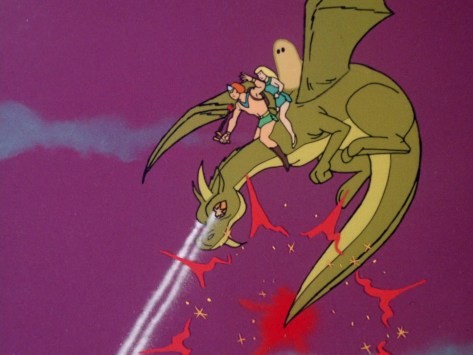
There was also the prehistoric Tundro, a cross between a triceratops and a rhino that could shoot molten rocks from his horn, and Zork, a dragon who could shoot lasers from his eyes and fly through space. Rounding out the group were Gloop and Gleep, blob-like creatures made of protoplasm who often protected the other Herculoids by shielding them from energy blasts, as well as stretching their bodies in numerous ways.
Learn More
| Airdates | Network | Studio |
| September 9, 1967–January 6, 1968 | CBS | Hanna-Barbera |
The villains in the series tended to embrace Space Age technology, a sharp contrast to the Stone Age aesthics of the Herculoids themselves.
The show generally took on an pro-environmental/naturalistic tone appropriate for the hippie movement of the era. Usually, the conflicts would involve aliens who heavily relied on technology attempting to force their tech upon the planet, causing Zandor and the other Herculoids to fight back and keep Amzot natural. While Zandor and Tara were more than capable of using advanced technology and flying spaceships (which can be presumed is how they got to Amzot initially), the Herculoids almost always used their wits and their own natural abilities to take on the aliens and their technology.
Voice work on the series included Mike Road (who had previously voiced Race Bannon on Jonny Quest) as Zandor, Virginia Gregg as Tara, Teddy Eccles as Dorno, along with Paul Frees and Vic Perrin (voice of Jonny Quest’s main villain Dr. Zin) as a few of the villains. For the creatures on the Herculoids team, their voices were actually a small collection of noises done by Mike Road and Paul Frees, which were continually recycled and spliced together. The Jonny Quest connection goes one step further, as virtually all of the music used in the series (besides the main theme) was reused from Jonny Quest.
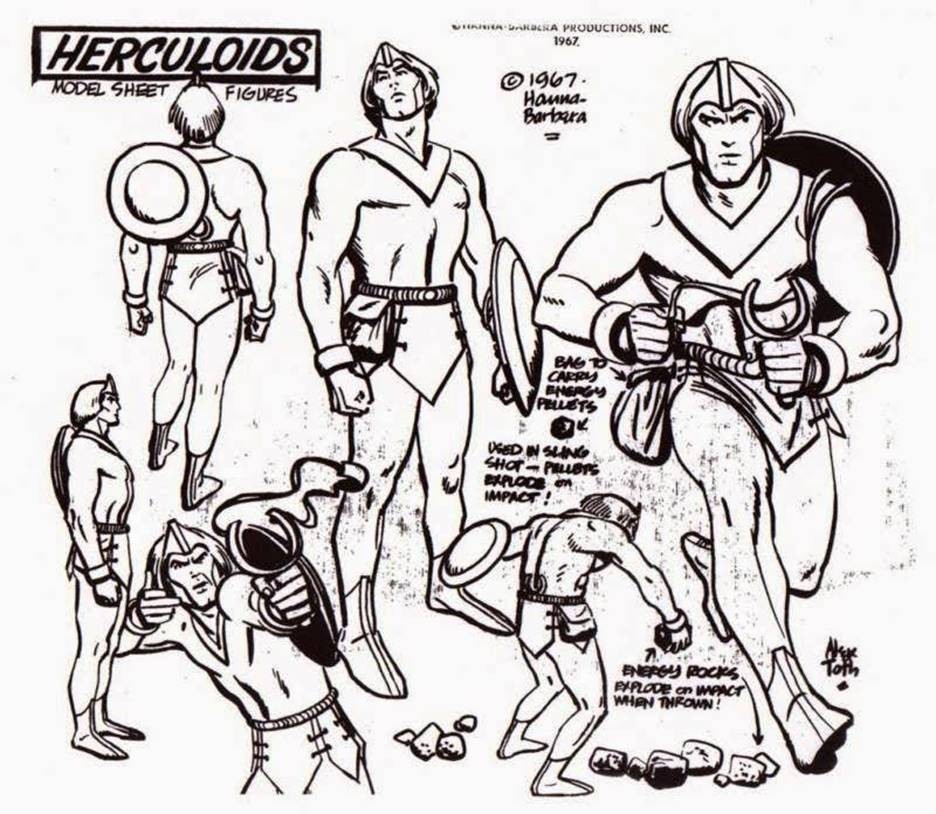
Model sheet for Zandor, drawn by Alex Toth
The Herculoids was, in essence, the successor series to Space Ghost. Besides featuring designs from Alex Toth, the majority of the scripts were written by the duo of Joe Ruby and Ken Spears, who had also been the main writers for Space Ghost. Additionally, as Joe Barbera would go on to claim in his autobiography, the network was so impressed by what they saw of the show that they essentially took the funding for a full second season of Space Ghost and gave it to Herculoids.
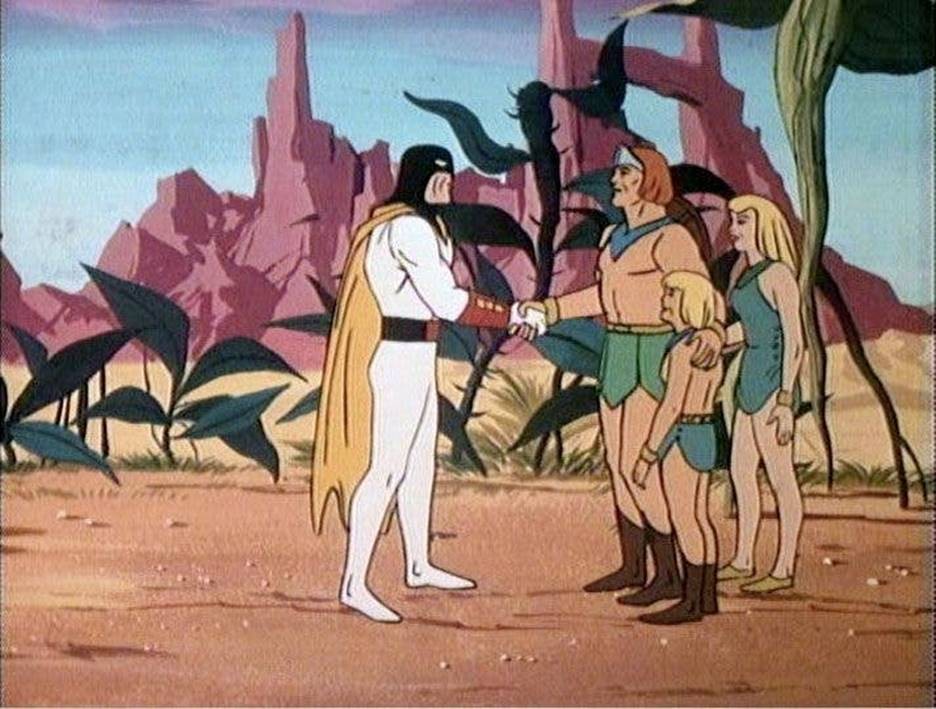
The Herculoids would eventually meet Space Ghost in the early ’80s.