
Significance of the Study
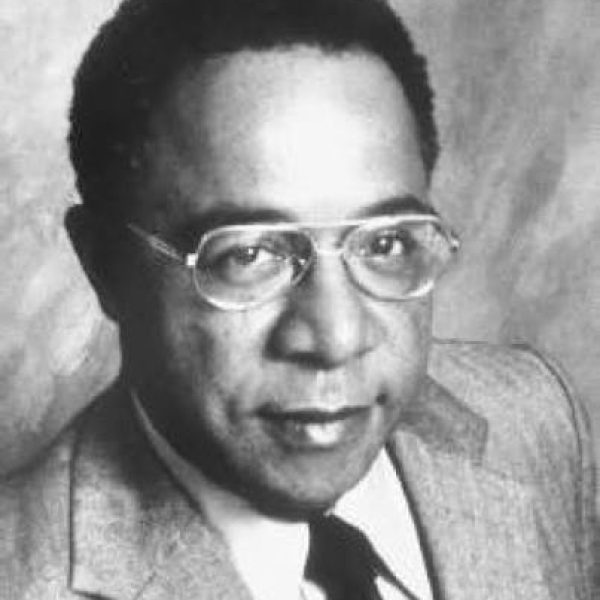
Alex Haley’s Queen: The Story of an American Family
In this epic historical novel, Haley, the author of Roots, traces his lineage on his father’s side from the love affair of an Irish-American plantation owner and a black slave. Though the cast of characters becomes overcrowded in places, this saga provides a grand overview of America’s tortured racial history from Andrew Jackson’s presidency through the Civil War and Reconstruction. Queen, the author’s grandmother, survives incredible trials to see her children reach heights she could never have imagined.
The novel Queen explores the slave trade in America and the wealth and prosperity it brought to the new land in the 17th& 18th centuries. The American Civilwar in 1860s has been fought against the abolition of slavery. The plantation owner of Southern states opposed the freedom of slaves.
The end of the civil war has brought dawn to the Black and they are set free. The bondage of the long years has been slashed and many coloured people moved towards the Northern states dreaming their new way of life. The identity of the Blacks has to be shaped by themselves with their new free life. But the lack of education and pressure of poverty compelled them to work for meagre wages and life a wretched life even after becoming free. The novel gives an account of the trauma of the protagonist, Queen during the search for her identity throughout her life. The term „trauma‟ refers to the severe mental and physical pain.
The core of the trauma, the mental pain remains a shocking event. The brutality of the incident cannot be experienced at the moment of occurrence, but its harshness anchors in the unconscious. The piercing pain returns to haunt and torment people through the fragments of memory and vague fears repeatedly (Oanh 99). The „trauma‟ of the characters can be depicted through the recurrent imagery and action in the narratives. The authors make use of the images to represent the torturous self and mental agony. In the novel Queen the author uses the image of the flames to signify the tormenting psychological pain of the woman.
Literature Review
Chapter 1: Identity
The novel Queen designates the treatment of Black women in the Southern plantations. Queen was born to the black slave Easter, and her white master, James Jackson. Her light skin has separated her
from both the Blacks and the Whites. The bi-racial birth of Queen, has not been considered as lawful to be the heiress of the plantation. The white master James Jackson Jr has never considered her as his legitimate daughter. Easter has been just a slave mistress. One of the central themes of Queen is the exploration of racial identity and the ambiguity that comes with being of mixed race. The light skinned child born to the White master and the Black slave mother has been called as Mulatto. The white society never accepts the children of the Black women as their race because of the Black bloodline.Queen’s life is a testament to the challenges faced by those who straddled the color line.
The novel meticulously details Queen’s struggle to find a place where she belongs, torn between the world of her mother and that of her father. This duality of identity is a recurring motif throughout the novel, reflecting the broader societal tensions of the time. Queen‟s life encounters a drastic change after the civil war. When all the slaves have been set free, most of the slaves of the plantation move towards the North. The real problem of Queen starts with her position in the family of Jackson. She has not been accepted in the family and is aslave girl with some privileges. Jackson insists her to go for her new life as he cannot pay for her service anymore.
The words of her father hurt her much as she thinks “Iis a family”(477). She considers her duty as a daughter in the family but the Jackson family treats her only as aslave. After informing the family, she heads towards the northern states. But her white skin, which gives her the appearance as a white lady, traps her into trouble. The black girls are warned against the sexual harassments by the mothers. Her trauma starts when she is raped brutally by Digby who has given an illusion of loving her. She has lost her false White identity and starts believing herself as a Black. In Huntsville, she visits a Black church trying to find food and shelter and she declares that she is “a nigra” (530) loudly. Her sense of belongingness has not been fully satisfied then.
Queen finds a shelter in a spinsters‟house in Huntsville. Her love with the Black man Davis results in pregnancy. But unfortunately, he deserts her and has left for his revolution against the White masters. Her boy baby has been named as Abner by the spinsters saying that he has to be brought up religiously.
Queen cannot tolerate the intrusion of the spinsters in bringing up the child. As she never wants to lose her child to anyone and endures all the harshness of life for Abner. Her fear of losing the child causes trauma throughout her life. Queen searches for Davis, who has become a rebellious speaker and eventually finds him. Unfortunately, he is killed by the White masters threatening that they would hurt his son. When Queen looks at the burnt dead body of Davis, her mental agony increases leaving a permanent scar in her mind. The flames have been in her mind and the fire demon is there in her always.
The death of Davis does not affect her at that moment but she experiences the traumatic shocks in her mind recurrently. At the time loss of love or bit of fear and anxiety her past memories torment her. This torture occurs at the sight of fire and flames. Later, when Queen meets Alec and his children she feels home. Her love for being in a family is gratified by being there with the Alec‟s children. She is reluctant in constructing a bond with them. When Abner is well-cared by Alec‟s daughters, she decides to marry him and to become the mother for those motherless children. Her new life with Alec has given her a peaceful environment. She feels that
The couple has a child named Simon. When Simon wants to study, Alec insists him to work with him instead of his studies. Though Queen wants her son to go to high school, she cannot tolerate her separation from her son. Alec insists, she wants to be in the family, and she never wants to be part with her children. The trauma of Queen reaches the climax when she is sorrowful after her son has gone for his studies.
She has not expressed her grief to anyone but her mind takes her back to all the past incidents and tortures as she witnesses the flames on the stove. She wants to put off the flames but suddenly “the fire had caught her at last”(656). She is treated medically but her talk with her son and her husband brings back her sanity. The Irish bloodline of Queen has not been a part of her identity in the white society.
Her childhood is filled with scars of being a nigger. She has never accepted her identity as a black. The quest for identity is a driving force in Queen’s life. Throughout the novel, she is depicted as a character in constant search of a sense of belonging. Her mixed heritage makes her a perpetual outsider, and this alienation is compounded by the social expectations placed upon her. Queen‟s journey is one of self-discovery, as she attempts to reconcile the disparate parts of her identity. In Los Angels Times, British Screen writer, Stevens compares her search for the identity is the symbolic representation of the black people, especially a black woman,“she became the equivalent of a medieval morality play–an Everywoman” (King). The story is the tragic journey of most of the people in search of their real identity. Haley uses Queen’s story to explore the broader theme of identity formation in a racially divided society.
The novel highlights how identity is not just a personal construct but also a social one, shaped by external perceptions and societal norms. Queen‟s experiences demonstrate the difficulty in framing a compact identity in a world of race and class. Alex Haley’s Queen is a powerful exploration of the complexities of race, identity, and heritage in the American South. Through the story of his grandmother, Haley offers a nuanced portrayal of the challenges faced by mixed-race individuals in a society that rigidly enforces racial boundaries.
The novel‟s exploration of racial ambiguity, the search for identity, and the impact of societal norms provide valuable insights into the cultural and social dynamics of the post-Civil War era. The novel is not just a historical one but a profound insight into the human relationships and the human experiences along with the ideas of history, culture and society. Haley‟s works demonstrate the relevance to ideology of race, class and sense of belonging in the present time.
Griots Dictionary.com defines Griots as “A member of a hereditary caste among the peoples of western Africa whose function is to keep an oral history of the tribe or village and to entertain with stories, poems, songs, dances, etc” (Griot). The role of the Griot is indispensible in Haley’s search for the truth about his family history. Juffure’s Griot not only verifies his family history but gives a broader history of the Kinte clan and how they came to Gambia from Mali and other African nations. The Griot is a staple fixture in the Mandinka tradition and it could even be said that Kinte drew inspiration from the Griots’ particular way of storytelling and made it his own, in order to save his identity from erasure by colonising forces.
Chapter 2 : Breakdown of the Novel
In the historical novel “Queen” by Alex Haley, readers are taken on an epic journey through generations of a family’s history, tracing the life of a remarkable woman named Queen. Set in the 19th century, this captivating story explores themes of identity, resilience, and the enduring power of family bonds. Through vivid storytelling and meticulous research, Haley paints a vivid picture of the struggles and triumphs faced by African Americans during a pivotal period in American history.
Brief Synopsis
“Queen” is a sweeping narrative that begins in Africa, where Queen is born into a Mandinka tribe. After being captured and sold into slavery, Queen finds herself aboard a slave ship bound for America. The story follows her as she endures the horrors of plantation life, navigates the complexities of relationships, and ultimately finds her voice and agency in a society that seeks to strip her of both.
The setting of the novel spans multiple locations, from the African continent to the plantations of the American South. Haley’s rich descriptions transport readers to each location, immersing them in the sights, sounds, and emotions of the characters’ experiences.
Main Characters
| Character | Description |
| Queen | The protagonist of the story, Queen is a resilient and courageous woman who endures unimaginable hardships and fights for her freedom. |
| Alec Haley | A journalist and the author’s grandfather, Alec serves as the bridge between the past and the present, as he uncovers Queen’s story and learns about his own heritage. |
| Master Waller | The cruel plantation owner who purchases Queen as a slave. He represents the oppressive system that Queen must navigate and find ways to resist. |
| Nancy Holt | A fellow slave on the plantation, Nancy becomes Queen’s confidante and ally, providing support and strength in the face of adversity. |
| James Jackson | A free black man, James plays a pivotal role in Queen’s life as a source of inspiration and guidance, helping her navigate the complexities of freedom. |
Summary of Different Story Points
Chapters 1-5: Queen’s Early Life in Africa and Capture
In the early chapters, readers are introduced to Queen’s idyllic life in Africa, where she is part of the Mandinka tribe. However, her world is shattered when slave traders invade her village, capturing Queen and separating her from her family. She endures a treacherous journey across the Atlantic Ocean, arriving in America as a slave.
Chapters 6-10: Life on the Plantation
Queen finds herself on the Waller plantation, where she experiences the harsh realities of slavery. She witnesses the brutal treatment of her fellow slaves, endures physical and emotional abuse, and forms a bond with Nancy Holt.
Chapters 11-15: Relationships and Struggles
Queen’s life takes a turn when she catches the attention of Master Waller, who begins to sexually exploit her. She also forms a deep connection with James Jackson, a free black man who educates her and encourages her to fight for her freedom.
Chapters 16-20: Escape and Freedom
With James’s help, Queen escapes the plantation and embarks on a dangerous journey to freedom. Along the way, she faces countless obstacles, but her determination and resourcefulness keep her going. She eventually reaches a free community in the North and starts a new life.
Chapters 21-25: Queen’s Legacy
The final chapters of the book explore Queen’s legacy and the impact she has on future generations. Alec Haley, the author’s grandfather, discovers Queen’s story and feels compelled to uncover his own ancestral roots. Through his research and interviews, he pieces together Queen’s life and preserves her memory for future generations.
Main Events
- Queen’s capture and journey on a slave ship.
- Queen’s arrival on the Waller plantation and her experiences as a slave.
- Queen’s relationship with Nancy Holt and the bond they form.
- Queen’s exploitation by Master Waller and her search for agency.
- Queen’s connection with James Jackson and their quest for freedom.
- Queen’s escape from the plantation and her journey to the North.
- Alec Haley’s discovery of Queen’s story and his research into his own heritage.
Themes and Insights
- Identity: The novel delves into the exploration of identity, as Queen grapples with her African roots while being forced to adapt to the harsh realities of slavery in America.
- Resilience: Queen’s story is a testament to the indomitable spirit and resilience of enslaved individuals who faced unimaginable hardships but found the strength to persevere.
- Family and Legacy: The importance of family bonds and the power of preserving one’s legacy are central themes in “Queen,” as both Queen and Alec Haley strive to uncover their ancestral roots and honor their heritage.
- Oppression and Resistance: The novel sheds light on the oppressive system of slavery and the various forms of resistance employed by enslaved individuals, highlighting the Bottom of Form