Literature Review
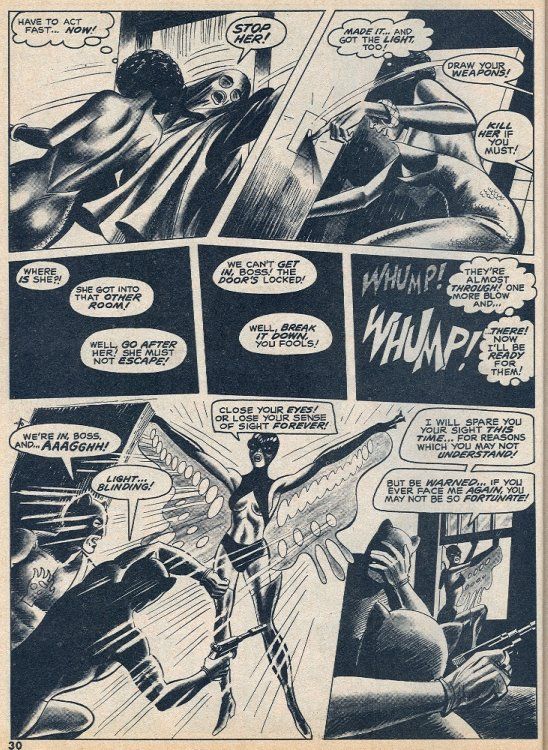
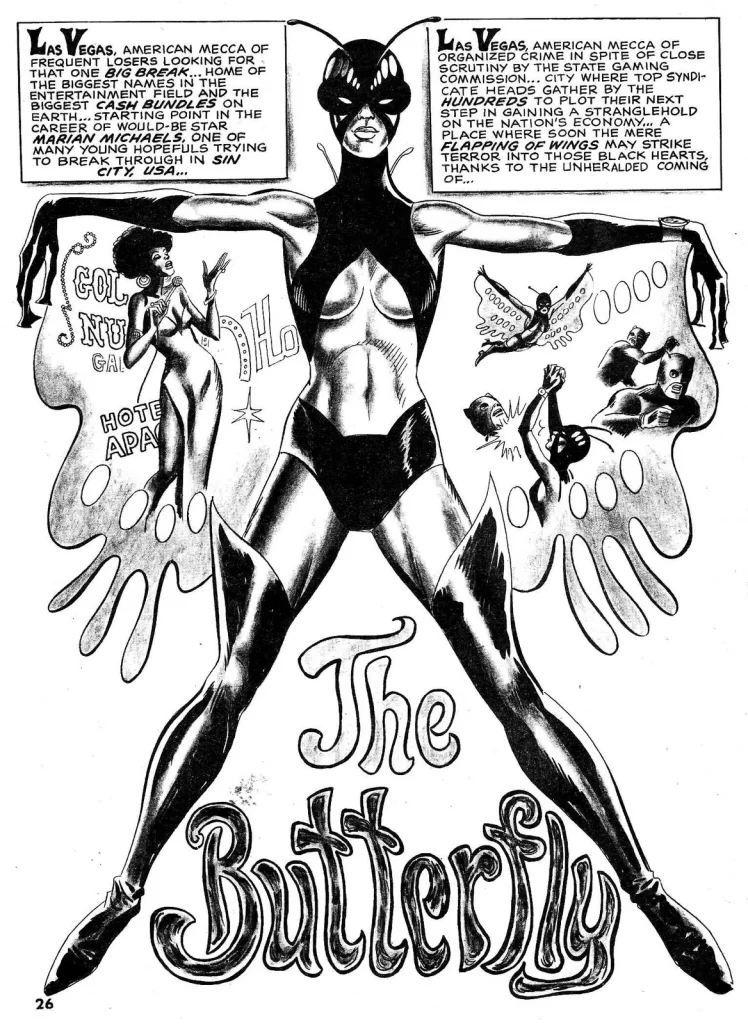
THE BUTTERFLY from HELL-RIDER #1
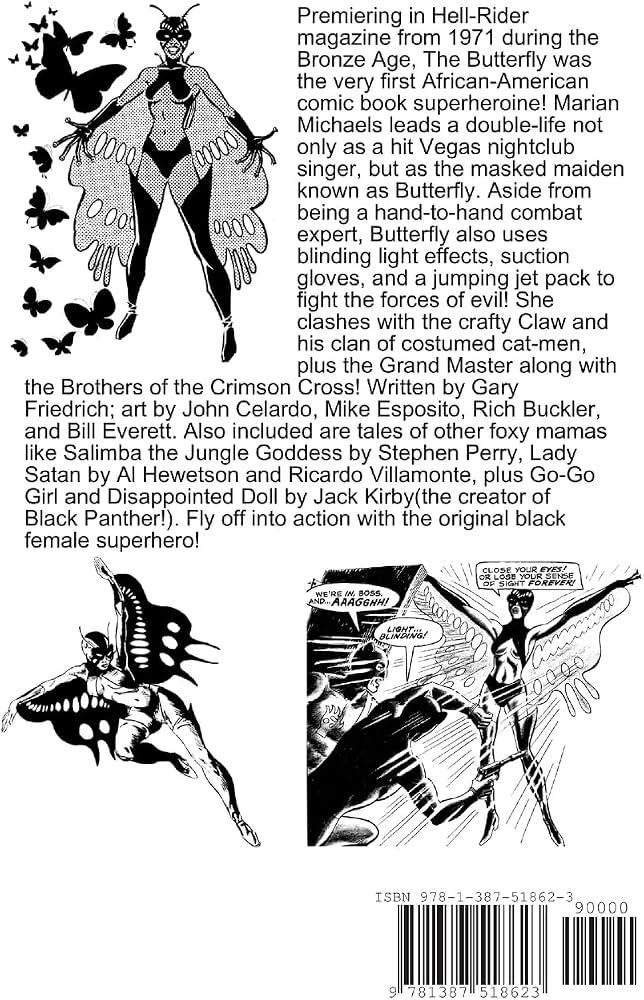
The Butterfly debuted in the first issue of Hell-Rider #1 (August 1971), a black-and-white superhero action comics magazine published by Skywald Publications. From 1970 through 1974, Skywald published mostly black-and-white horror comics magazines, such as Nightmare, Psycho, and Scream; these magazines were exempt from the self-imposed content restrictions of mainstream comic book publishers under the Comics Code Authority.
Skywald used this creative freedom to target an older male comics-reading audience, with content that would not be found in 1970s mainstream comics. The cover of Hell-Rider #1 depicts a costumed superhero (the eponymous Hell-Rider) riding a flame-throwing motorcycle as he thwarts costumed villains on a beach, while two bikini-clad women – one black, the other white – cling to one another amid the excitement.
In her book Black Women in Sequence: Re-inking Comics, Graphic Novels, and Anime, African American studies professor Deborah Elizabeth Whaley examines the titillating elements of the cover: “The thrill-riding, violence, patriotism, scant clothing, homoerotic imagery, and cross-racial desire illustrated on this cover were surely meant to entice male readers.”But Whaley goes on to note the significance of the comic: “Yet Hell Rider [sic] did notable cultural work by introducing an unlikely metamorphosis in the comic book world: the Butterfly, who is the first Black female comic book superheroine.”
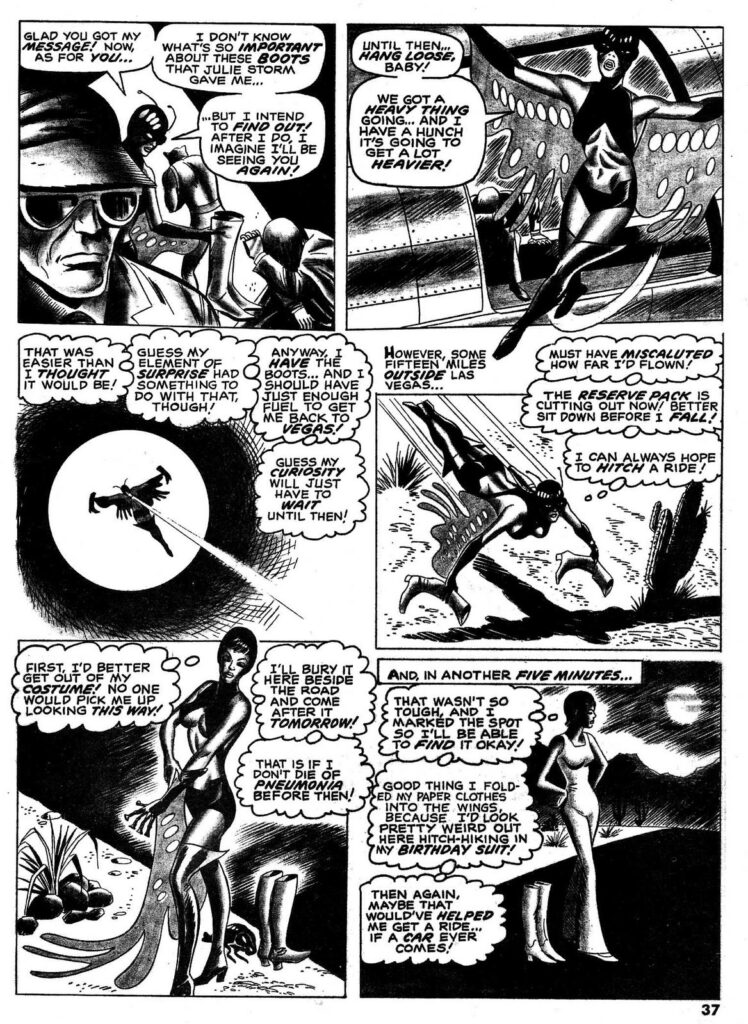
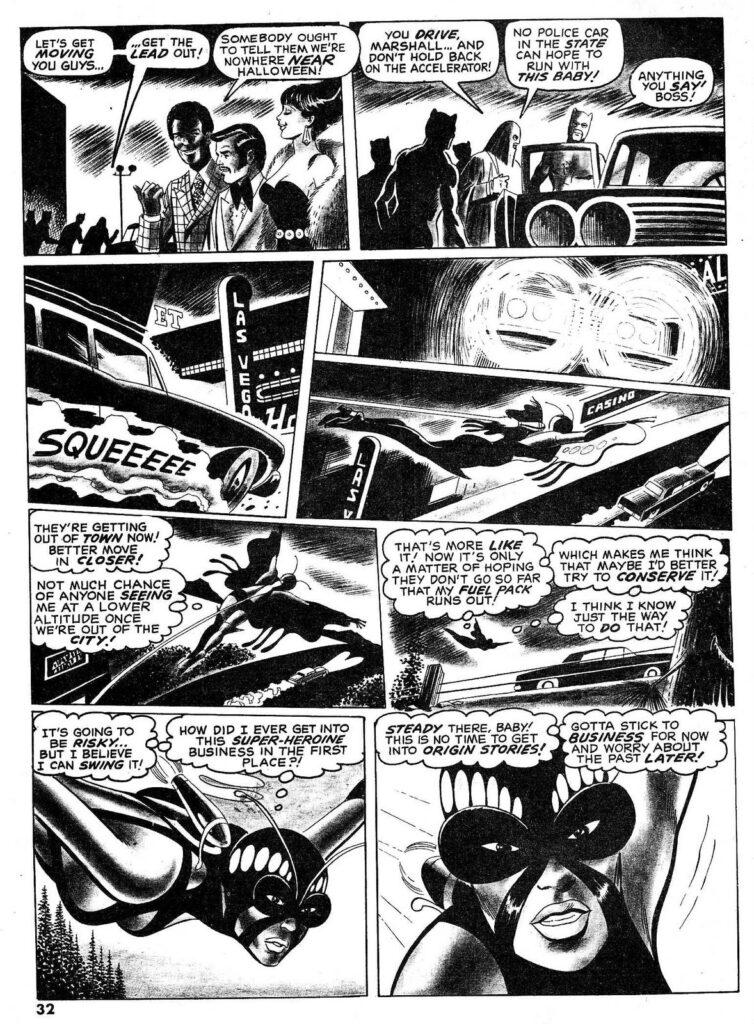
Hell-Rider featured three loosely inter-connected adventure strips: lawyer/biker/Vietnam veteran Brick Reese is given superhuman strength and endurance by the experimental Q-47 formula and fights crime as the costumed hero, Hell-Rider; Las Vegas nightclub singer (and coincidentally, a friend of one of Reese’s clients) Marian Michaels dons a revealing skintight costume – equipped with a jetpack and blinding strobe lights – to fight crime as the Butterfly; and the Wild Bunch, a tough-but-benevolent motorcycle gang with social connections to both Reese and Michaels.
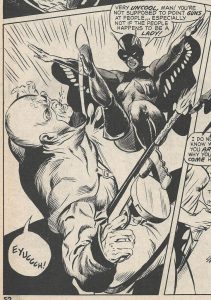
From HELL-RIDER #2
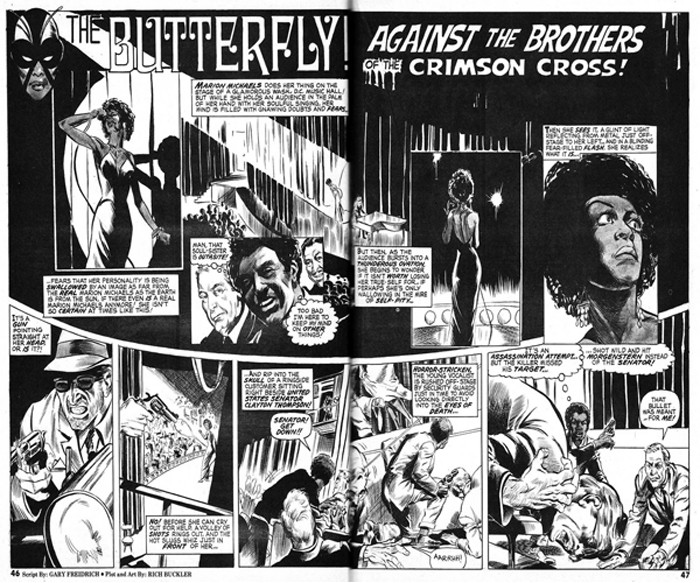
The characters were created by writer Gary Friedrich with a variety of artists, including Syd Shore, Dick Ayers, Ross Andru, Mike Esposito, John Celardo, and Rich Buckler. Artists Mike Esposito and John Celardo are credited with illustrating the Butterfly’s first adventure, and in the second and final issue of Hell-Rider, Buckler is credited as the artist for that issue’s Butterfly adventure.
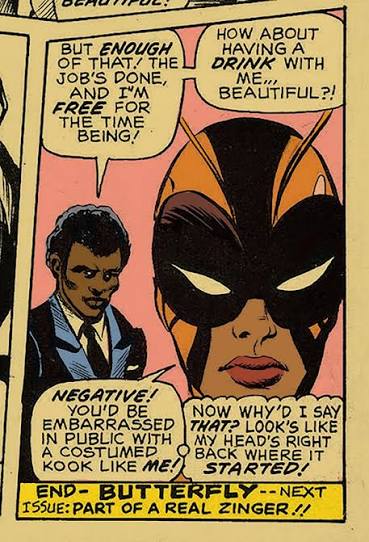
From HELL-RIDER #2
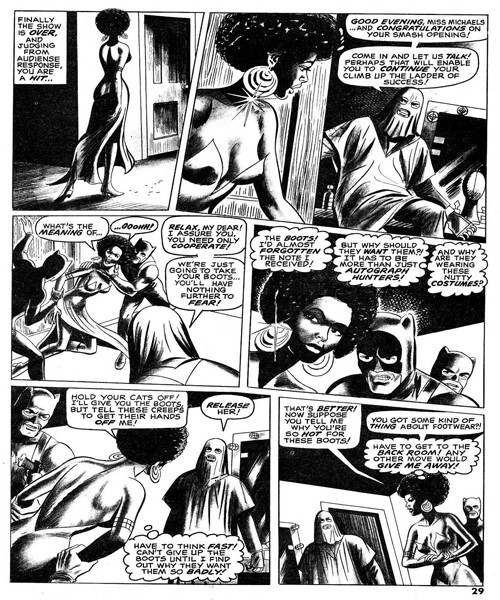
With only two published issues of Hell-Rider, the Butterfly had a brief superhero career. In the first issue, she fights the henchmen of a villainous costumed drug dealer, The Claw; in issue two, she defeats a racist, Ku Klux Klan-inspired organization, the Order of the Crimson Cross, which fails to corrupt the superheroine with its mind control technology. For modern comics readers, the Butterfly’s published adventures are obscure and hard to find, and the character is generally only remembered by comics historians and Skywald fans.
From HELL-RIDER #2
Approximately a year after Hell-Rider ceased publication, Friedrich, now working for Marvel Comics, co-created another hero character with similarities to Hell-Rider (e.g., rides a motorcycle, has a similar name and uses fire, but with an actual connection to Hell), Ghost Rider. While many comics fans know Friedrich as the co-creator of Ghost Rider, they may not be aware that he achieved a cultural milestone when he co-created and wrote the adventures of America’s first black female superhero character.