
Introduction
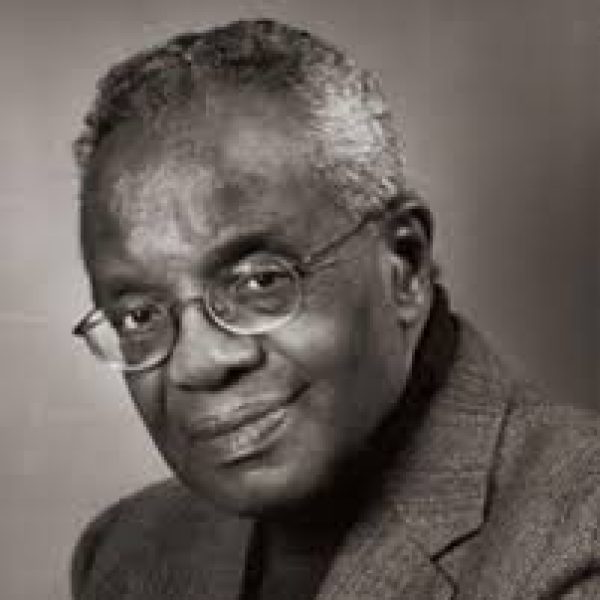
Derrick Albert Bell, Jr., was born in Pittsburgh, Pennsylvania, on November 6, 1930. Bell was offered a scholarship to Lincoln University but was unable to attend because he did not receive enough financial aid. Becoming the first member of his family to go to college, Bell chose to attend Duquesne University, earning his A.B. in 1952.
While attending Duquesne University, Bell joined the ROTC, and following his graduation, went to Korea as part of the U.S. Air Force. Returning from the war in 1954, Bell attended the University of Pittsburgh Law School, earning an L.L.B. in 1957. Bell was hired by the U.S. Justice Department after graduation, but left in 1959 over his refusal to terminate his involvement with the NAACP; subsequently, Thurgood Marshall recruited him to join the NAACP Legal Defense Fund where he oversaw three hundred school desegregation cases. In 1966, Bell was named deputy director of civil rights at the U.S. Department of Health, Education, and Welfare, before becoming a teacher at USC law school and director of USC’s Western Center on Law and Poverty in 1968.
In 1971, Bell became the first African American to become a tenured professor at Harvard Law School; there he established a course in civil rights law and wrote Race, Racism and American Law, which today is a standard textbook in law schools around the country. Leaving Harvard, Bell became the first African American dean of the University of Oregon Law School, and in 1985, he resigned in protest after the university directed him not to hire an Asian American candidate for a faculty position. Returning to Harvard Law School, Bell would again resign in protest in 1992 over the school’s failure to hire and offer tenure to minority women.
In addition to his work in the classroom, Bell was an acclaimed author, having written numerous books, most notably his series featuring fictional civil rights leader Geneva Crenshaw, including And We Are Not Saved and Faces at the Bottom of the Well. In 2002, Bell wrote Ethical Ambition: Living a Life of Meaning and Worth, which contained his thoughts on achieving success while maintaining integrity. Most recently, Bell authored Silent Covenants: Brown v. Board of Education and the Unfulfilled Hopes for Racial Reform. Bell had been the recipient of numerous honors and awards; his later work included serving as a visiting professor of law at the New York University School of Law.
Derrick Bell passed away on October 5, 2011 at age 80.
Literature Review
Dystopian satire. Aliens visiting the US offer to provide the country with everything needed to solve many of its problems in exchange for the entire African American population. Offered enough gold to bail out the country, chemicals that can un-pollute the environment, and a safe nuclear energy and fuel to overcome the energy crisis, the US government agrees, and all African Americans are loaded onto what are obviously slave ships.
For the first time in history, extraterrestrial beings have announced an impending visit to the United States. The whole population watches as ships land on the East Coast and the aliens walk on water toward them. They make a simple announcement: they have gold to solve the country’s debt crisis, de-pollutants to solve the climate crisis, and safe nuclear energy, all of which they are prepared to offer to the country – in exchange for the country’s Black citizens.
Immediately legislatures are called into session to discuss the proposal. Millions of callers give their opinions – most whites in favor of the trade, most blacks not. The President’s cabinet members offer various justifications for the trade – the overwhelming benefit of the aliens’ offerings, the lessened burden on social services without Black people, the alleviation of racial tensions, and the argument that leaving would be a patriotic duty any of them would take on if asked. The President calls on Gleason Golightly, a conservative Black economics professor, to weigh in. Golightly appeals to the moral side of the argument, backing his vehement opposition to the mass exile with a review of the many times in American history leaders considered and rejected the proposition of sending Black people away. The Cabinet did not budge in their opinions, and Golightly was left dejected at his mistake, having always considered himself one who could win over white politicians with cunning.
An Anti-Trade coalition drafts bills and responses to counteract the proposal, as well as a plan to evacuate and hide Black people in the worst-case scenario. Golightly speaks at their convention with the argument that they should accept the trade with enthusiasm and convince white people that Black people would be receiving a better future – a prospect which would enrage white people and reverse the trade. Again, his proposal is rejected.
Fortune 500 CEOs balk at the prospect of losing the profit they make off Black people, and launch massive media campaigns with images of mixed-race couples, appealing to the country’s pathos. Jewish organizations condemn the trade as analogous to Hitler’s ‘final solution’, but are intimidated out of their organizing plans by the government. The Televangelists of America herald the call from the aliens as God’s will, and organize a rally depicting dutiful Black people boarding a ship resembling a sacrificial alter. Groups in favor convene a constitutional convention and introduce a twenty-seventh amendment, requiring ‘special service’ calls by Congress to be headed by all citizens, to be ratified. They proclaim that the Framers’ intention was to build an all-white country, and attempts to the contrary have failed. While pro- and anti- trade groups riffed back and forth in the media, the Supreme Court and public opinion sided with pro-trade, and the amendment was ratified. Thousands of Black people were killed trying to escape. On Martin Luther King Day of that year, the Black population was rounded up, stripped, and sent into the spaceships.
Critical Race Theory has come to dominate how many modern people think about race and racism. I’ve mentioned this theory before, but have only offered a partial definition. Personal time doesn’t allow me a full explanation of the origins of Critical Race Theory (CRT), even though I think CRT is an important topic worthy of discussion. But it so happens that one of the founders of CRT, Derrick Bell, crafted a science fiction story called The Space Traders intended to illustrate the plight of black people in modern America. This post is a discussion of that science fiction short story and how its backstory stemmed from a number of the ideas central to CRT. And…by the way…we are finally on a subject that’s clearly on topic for Speculative Faith–science fiction!
Significance of the Study
The central character in The Space Traders is Gleason Golightly, a conservative black man who is an economic advisor to a white Republican president. As I’ve said, he’s the only character in the story with any depth. Though the story doesn’t begin with him.
The tale starts in a near-future scenario–from the point of view of the Nineties–in which aliens mysteriously arrive on January 1st and offer the United States unlimited clean energy and vast wealth–with a catch. All the aliens want is the USA to hand over every single person in the country who identifies as black. For purposes unknown.
The tale begins on 1 January and counts up until 17 January–which in the story world is a Martin Luther King Jr holiday…and also the day the United States ushers all black citizens into the alien ship cargo holds. Irony blatantly intended.
The story says the aliens adopt a voice like the former president Ronald Reagan, which causes all white people to trust them but causes suspision in all black people in America. I’ll comment on this further down.
Action leaps to the White House and of course the conservative cabinet is all for making this exchange. After all, in this story world, their conservative policies have wrecked the environment and bankrupt the country–they despirately need the alien technology and wealth to rescue the country from its dire straits. (I won’t comment on this further, but yeah this bit of story backdrop is more than a bit over-the-top-politically-liberal.)
But they want to hear from their token black economics advisor–the story directly calls him “token” (and mentions black people see this character as an “Uncle Tom”). The concerns of the cabinet being: “How can we sell this exchange to the public?” and “How can we justify our actions?” and “How can make this work legally?” rather than, you know, the ethics of the situation.
The story says directly that if the aliens had asked for any other sub-group of people, such as green-eyed red heads, the exchange would never have been considered for a moment. I’ll comment on this in a bit.
Golightly naturally doesn’t want the exchange to take place. The story from this point forth is about his efforts to first avert the exchange but when his efforts fall through, to save himself by escaping to Canada.
His strategy to derail the exchange is that he meets with a group of black Civil Rights leaders and attempts to persuade them they should speak out in favor of the trade. If they could only show that black people are in favor of the prospect of being hauled away by mysterious aliens, then white people would themselves wonder why black people were for it, which would be their best chance to save themselves. Because, you know, if black people want the exchange, white people won’t want to give it to them. Reverse psychology.
Golightly fails to persuade the black community leaders. They think his idea is crazy–but he despairs when they don’t listen to him.
To legally get rid of all blacks, the USA needs to enact a constitutional amendment in which the military draft is applied to black people. So all will be drafted into “service” for the good of the rest of the country. Bell mentions a few legal parallels to this, specifically stating the US Constitution itself sacrificed black people for the purpose of making the USA, so the idea the nation would do so again isn’t unthinkable.
The story spends a bit of time talking about the Liberal opposition to the amendment allowing the exchange. Part of New York City is shown to be shut down for a while due to protests led by Rabbi Abraham Specter, with the cooperation of many American Jews. The story says at one point what the Jewish motivaton is–they don’t want to be the ones stuck at the bottom of the social order to receive the full ire of angry poor whites. So they want black people to stay.
Other, non-Jewish Liberals are referred to in that thirty percent of the USA is said to be against the amendment, while seventy percent are for it. Note that the US population of African Americans is about eleven percent, so nineteen percent of the rest of America were against the exchange. The Jewish population of America is less than nineteen percent and I can’t imagine Bell missing this detail, so clearly other, non-Jewish Liberals also opposed “the Trade.” The story never says who were the other Liberals, but it does assign them a motivation: Guilt.
.
Golightly attempts to make the case early on with the cabinet that white people will be extremely afflicted with a sense of guilt after the fact if they trade off all black people for the alien tech. This doesn’t affect the cabinet, but as far as the story is concerned, guilt is the only motivator to want to help black people other than not wanting to be at the bottom of the social order yourself.
The aliens warn the United States government that they if they let black people escape to other countries, the deal will be off. The story references a few getting away, but the USA mostly blocking any escapes. The federal government promises to send a few prominent black people to other countries in exchange for their help, including Golightly and his wife, but they take back this offer in the end.
The second to last moment of the story features Golightly trying to escape to Canada but being caught by the US Secretary of the Interior, a colleague Golightly worked with and knew personally. His wife wondered if black people would have been worse off if Golightly had managed to block the legislation, because black people would be blamed for the country not receiving aliens’ benefits. The story basically leaves this comment hanging.
In the end, the aliens require all black people to strip down to a single article of clothing before boarding the ship. The story pointedly says they leave the United States in the same way their ancestors had arrived. As ship’s cargo.
Other, non-Jewish Liberals are referred to in that thirty percent of the USA is said to be against the amendment, while seventy percent are for it. Note that the US population of African Americans is about eleven percent, so nineteen percent of the rest of America were against the exchange. The Jewish population of America is less than nineteen percent and I can’t imagine Bell missing this detail, so clearly other, non-Jewish Liberals also opposed “the Trade.” The story never says who were the other Liberals, but it does assign them a motivation: Guilt.