
Background of the Study
Introduction
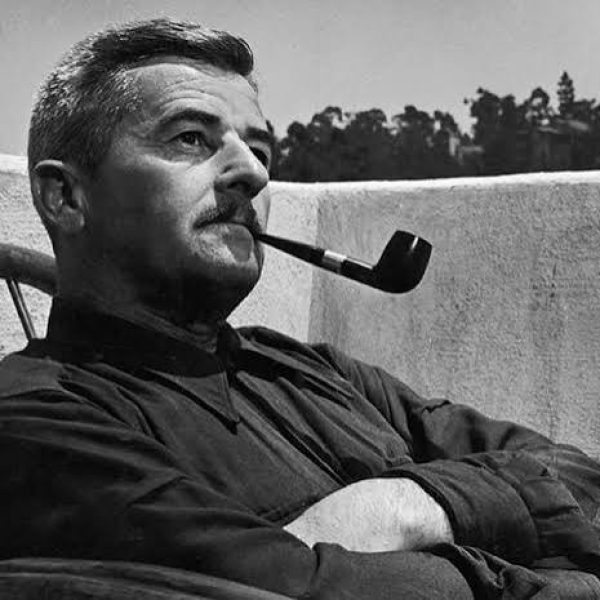
William Faulkner (1897-1962), who came from an old southern family, grew up in Oxford, Mississippi. He joined the Canadian, and later the British, Royal Air Force during the First World War, studied for a while at the University of Mississippi, and temporarily worked for a New York bookstore and a New Orleans newspaper. Except for some trips to Europe and Asia, and a few brief stays in Hollywood as a scriptwriter, he worked on his novels and short stories on a farm in Oxford.
In an attempt to create a saga of his own, Faulkner has invented a host of characters typical of the historical growth and subsequent decadence of the South. The human drama in Faulkner’s novels is then built on the model of the actual, historical drama extending over almost a century and a half Each story and each novel contributes to the construction of a whole, which is the imaginary Yoknapatawpha County and its inhabitants. Their theme is the decay of the old South, as represented by the Sartoris and Compson families, and the emergence of ruthless and brash newcomers, the Snopeses. Theme and technique – the distortion of time through the use of the inner monologue are fused particularly successfully in The Sound and the Fury (1929), the downfall of the Compson family seen through the minds of several characters. The novel Sanctuary (1931) is about the degeneration of Temple Drake, a young girl from a distinguished southern family. Its sequel, Requiem For A Nun (1951), written partly as a drama, centered on the courtroom trial of a Negro woman who had once been a party to Temple Drake’s debauchery. In Light in August (1932), prejudice is shown to be most destructive when it is internalized, as in Joe Christmas, who believes, though there is no proof of it, that one of his parents was a Negro. The theme of racial prejudice is brought up again in Absalom, Absalom! (1936), in which a young man is rejected by his father and brother because of his mixed blood. Faulkner’s most outspoken moral evaluation of the relationship and the problems between Negroes and whites is to be found in Intruder In the Dust (1948).
In 1940, Faulkner published the first volume of the Snopes trilogy, The Hamlet, to be followed by two volumes, The Town (1957) and The Mansion (1959), all of them tracing the rise of the insidious Snopes family to positions of power and wealth in the community. The reivers, his last – and most humorous – work, with great many similarities to Mark Twain’s Huckleberry Finn, appeared in 1962, the year of Faulkner’s death.
Significance of the Study
The Shift – Primitive Values Go down, Moses is a collection of short stories. They tell the composite history of the McCaslin family, of the descendants of Carothers McCaslin and the residents of the plantation he founded. With the bits of information appearing in the stories the complete history of Carothers McCaslin is clarified. Each story is independent of the other and has its own plot. This collection is interrelated with a number of themes, which are intertwined and spread out among a multitude of stories and characters. Go down, Moses can be said that another brilliant set piece, which takes a probing look to understand the south as a whole. It is also proof to the modern American south. Among the creations of God man is the highest. He plays a prominent role right from the time of creation.
“Go Down, Moses [is] a collection of seven stories by William Faulkner, published in 1942, which treat the McCaslin family, white and black, from the time of Lucius, the founder at the opening of the 19th century, to the mid-20th century, all together representative of Southern history. Hunting and rituals of initiation are basic metaphors. The longest and most significant of the stories is The Bear.” James D. Hart The Oxford Companion to American Literature, 5th edition (Oxford 1941-83) 286 “There are in Go Down, Moses two loosely related strands of subject matter—the life of the ascetic Isaac McCaslin, the hunter, and the life of Lucas Beauchamp, the son of the mulatto slave who in turn had been the son of Carothers McCaslin, Isaac’s grandfather. The antecedents of Isaac are explained in ‘Was,’ the humorous story in which we learn that Uncle Bud and Uncle Buck, Isaac’s father, refused to profit from slavery. Isaac himself figures dominantly in ‘The Old People,’ ‘The Bear,’ and ‘Delta Autumn.’ Two chapters are devoted to Lucas Beauchamp and his family, ‘The Fire and the Hearth’ and “Go Down, Moses.’
Both of these sections, however, relate more directly and intimately to the action in Intruder in the Dust, a later novel, than to the chapters devoted to Isaac. The theme implicit in the sections devoted to Lucas Beauchamp is white injustice to the Negro, and the theme implicit in those devoted to Isaac is the nobility of character to be learned from life in the wilderness. In ‘The Bear’ Faulkner attempts to bring the two subject matters and therefore the two themes together, with the wilderness theme dominating.” William Van O’Connor “The Wilderness One The Shift – Primitive Values Go down, Moses is a collection of short stories. They tell the composite history of the McCaslin family, of the descendants of Carothers McCaslin and the residents of the plantation he founded. With the bits of information appearing in the stories the complete history of Carothers McCaslin is clarified.
Each story is independent of the other and has its own plot. This collection is interrelated with a number of themes, which are intertwined and spread out among a multitude of stories and characters. Go down, Moses can be said that another brilliant set piece, which takes a probing look to understand the south as a whole. It is also proof to the modern American south. Among the creations of God man is the highest. He plays a prominent role right from the time of creation.
“Go Down, Moses [is] a collection of seven stories by William Faulkner, published in 1942, which treat the McCaslin family, white and black, from the time of Lucius, the founder at the opening of the 19th century, to the mid-20th century, all together representative of Southern history. Hunting and rituals of initiation are basic metaphors. The longest and most significant of the stories is The Bear.” James D. Hart The Oxford Companion to American Literature, 5th edition (Oxford 1941-83) 286 “There are in Go Down, Moses two loosely related strands of subject matter—the life of the ascetic Isaac McCaslin, the hunter, and the life of Lucas Beauchamp, the son of the mulatto slave who in turn had been the son of Carothers McCaslin, Isaac’s grandfather. The antecedents of Isaac are explained in ‘Was,’ the humorous story in which we learn that Uncle Bud and Uncle Buck, Isaac’s father, refused to profit from slavery. Isaac himself figures dominantly in ‘The Old People,’ ‘The Bear,’ and ‘Delta Autumn.’ Two chapters are devoted to Lucas Beauchamp and his family, ‘The Fire and the Hearth’ and “Go Down, Moses.’ Both of these sections, however, relate more directly and intimately to the action in Intruder in the Dust, a later novel, than to the chapters devoted to Isaac.
The theme implicit in the sections devoted to Lucas Beauchamp is white injustice to the Negro, and the theme implicit in those devoted to Isaac is the nobility of character to be learned from life in the wilderness. In ‘The Bear’ Faulkner attempts to bring the two subject matters and therefore the two themes together, with the wilderness theme dominating.” William Van O’Connor “The Wilderness One The Shift – Primitive Values Go down, Moses is a collection of short stories. They tell the composite history of the McCaslin family, of the descendants of Carothers McCaslin and the residents of the plantation he founded. With the bits of information appearing in the stories the complete history of Carothers McCaslin is clarified. Each story is independent of the other and has its own plot.
This collection is interrelated with a number of themes, which are intertwined and spread out among a multitude of stories and characters. Go down, Moses can be said that another brilliant set piece, which takes a probing look to understand the south as a whole. It is also proof to the modern American south. Among the creations of God man is the highest. He plays a prominent role right from the time of creation.
“Go Down, Moses [is] a collection of seven stories by William Faulkner, published in 1942, which treat the McCaslin family, white and black, from the time of Lucius, the founder at the opening of the 19th century, to the mid-20th century, all together representative of Southern history. Hunting and rituals of initiation are basic metaphors.
The longest and most significant of the stories is The Bear.” James D. Hart The Oxford Companion to American Literature, 5th edition (Oxford 1941-83) 286 “There are in Go Down, Moses two loosely related strands of subject matter—the life of the ascetic Isaac McCaslin, the hunter, and the life of Lucas Beauchamp, the son of the mulatto slave who in turn had been the son of Carothers McCaslin, Isaac’s grandfather. The antecedents of Isaac are explained in ‘Was,’ the humorous story in which we learn that Uncle Bud and Uncle Buck, Isaac’s father, refused to profit from slavery. Isaac himself figures dominantly in ‘The Old People,’ ‘The Bear,’ and ‘Delta Autumn.’ Two chapters are devoted to Lucas Beauchamp and his family, ‘The Fire and the Hearth’ and “Go Down, Moses.’ Both of these sections, however, relate more directly and intimately to the action in Intruder in the Dust, a later novel, than to the chapters devoted to Isaac. The theme implicit in the sections devoted to Lucas Beauchamp is white injustice to the Negro, and the theme implicit in those devoted to Isaac is the nobility of character to be learned from life in the wilderness. In ‘The Bear’ Faulkner attempts to bring the two subject matters and therefore the two themes together, with the wilderness theme dominating.” William Van O’Connor “The Wilderness One The Shift – Primitive Values Go down, Moses is a collection of short stories. They tell the composite history of the McCaslin family, of the descendants of Carothers McCaslin and the residents of the plantation he founded. With the bits of information appearing in the stories the complete history of Carothers McCaslin is clarified. Each story is independent of the other and has its own plot. This collection is interrelated with a number of themes, which are intertwined and spread out among a multitude of stories and characters. Go down, Moses can be said that another brilliant set piece, which takes a probing look to understand the south as a whole. It is also proof to the modern American south. Among the creations of God man is the highest. He plays a prominent role right from the time of creation.
“Go Down, Moses [is] a collection of seven stories by William Faulkner, published in 1942, which treat the McCaslin family, white and black, from the time of Lucius, the founder at the opening of the 19th century, to the mid-20th century, all together representative of Southern history. Hunting and rituals of initiation are basic metaphors. The longest and most significant of the stories is The Bear.” James D. Hart The Oxford Companion to American Literature, 5th edition (Oxford 1941-83) 286 “There are in Go Down, Moses two loosely related strands of subject matter—the life of the ascetic Isaac McCaslin, the hunter, and the life of Lucas Beauchamp, the son of the mulatto slave who in turn had been the son of Carothers McCaslin, Isaac’s grandfather. The antecedents of Isaac are explained in ‘Was,’ the humorous story in which we learn that Uncle Bud and Uncle Buck, Isaac’s father, refused to profit from slavery. Isaac himself figures dominantly in ‘The Old People,’ ‘The Bear,’ and ‘Delta Autumn.’ Two chapters are devoted to Lucas Beauchamp and his family, ‘The Fire and the Hearth’ and “Go Down, Moses.’ Both of these sections, however, relate more directly and intimately to the action in Intruder in the Dust, a later novel, than to the chapters devoted to Isaac. The theme implicit in the sections devoted to Lucas Beauchamp is white injustice to the Negro, and the theme implicit in those devoted to Isaac is the nobility of character to be learned from life in the wilderness. In ‘The Bear’ Faulkner attempts to bring the two subject matters and therefore the two themes together, with the wilderness theme dominating.” William Van O’Connor “The Wilderness One
Literature Review
The book tells the story primarily of the McCaslin family, starting in the late 1700s (likely the land’s original American proprietor) and continuing into childless Isaac ‘Ike’ McCaslin’s old age, where the novel begins. After establishing Ike as “uncle to half a county and father to no one”, already anticipating the tale of his family’s mixed black-white branch. Faulkner then flashes back to a memory of Ike’s elder cousin, McCaslin Edmonds, of a time he accompanied his uncle Buck to bring back an escaped slave.
The story takes place in 1859, just before the War, a time for which Southern writers lesser than Faulkner may have expressed nostalgia. In Faulkner’s 1859, although aristocratic Southern society has yet to unravel, its fabric is fraying at the edges. A fascination with those edges, with the liminal, has often characterized the best Southern literature: O’Connor, for instance, uses “freaks” and the grotesque to heighten her examination of fallen human nature. To the deaf you shout, she avowed in one essay, and to the nearly-blind you make wild and exaggerated gestures – hence a murdered grandmother, a Bible salesman turned sexual abuser, or a woman gored by a bull. Faulkner tends to rely less on implausible situations, not so much shouting as attuning readers’ ears to the minute gestures with undertones humorous, ominous, or shocking.
By way of summary, a McCaslin slave runs for a neighboring plantation, where he plans to see Tennie, a slave of the Beauchamp family. A nine-year-old McCaslin Edmonds, ‘Cass’ for short, accompanies his impetuous and single Uncle Buck to try to run him down before he reaches the Beauchamps’, while his Uncle Buddy, also a bachelor, stays home but counsels him to look after Buck. (The uncles’ full names are Theophilus and Amodeus, respectively Greek and Latin for ‘lover of God’.) Hubert Beauchamp has a sister, Sophonsiba, who’s tried to seduce Buck before. Sophonsiba wants a husband, her brother wants to find her one, and both McCaslins want to stay single: Sophonsiba has tried to force Buck’s hand before, but his canny brother always interferes.
After Buck and Cass arrive, Hubert asks him to take a drink on the porch before chasing down his slave, and Buck obliges. Several drinks and midday dinner later, and we realize Buck is the real quarry, lured to “bear-country” by his slave. Turns out, the slave (“Tomey’s Turl”) has gotten Tennie to cut a deal: he lures Buck to Warwick (pretentious and unfounded name of the Beauchamps’ farm) for Sophonsiba, and her husband will arrange for he or Tennie to be sold so they can be together. After tracking Turl unsuccessfully all night (and all but emptying a liquor bottle in the process), Buck finally lays down in an unused bedroom. Sophonsiba screams, and Buck has been caught: for his and Sophonsiba’s honor, he’ll be forced to marry her.
The story plays out like a comedy: two uncles, one shrewd and the other bumbling; a secret plot by two lovers to be together and play matchmakers in the process; the dramatic irony as we watch Buck stumble unknowingly into the trap; a fox wreaking havoc in the big house by drawing the dogs at full-speed after it. The whole scenario is laugh-out-loud funny at times, but challenging at others, and no matter how much it might’ve read to its original audience like a plantation comedy, Faulkner’s also calling our attention to the more disturbing elements.
For instance: the name Tomey’s Turl, by implication without father and without last name, already implies his ‘miscegenation’ by the elder McCaslin and his slave, as well as (more germane) the family’s refusal to acknowledge him. Every time Buck and Buddy speak of him, they disavow him, dispossess him, and repudiate their (half-) fraternity with him. “Tomey’s” Turl – we don’t need to speak of a father. And it fits too with neither Buck nor Buddy having had children: they want the benefits of their legacy, the house and land and wealth, without the cost which children would bring. The hunt’s incursion into the home (the fox) serves as comedic foreshadowing to the marriage hunt at Warwick, but also it suggests an intrusion of the wild into domestic life.
And, of course, there’s the problem of slavery, but in this story it is drawn up into the themes of hunting and gaming. Cass consistently uses hunt language to describe his uncle’s chase of Turl, calling it “the best race he had ever seen.” Humans are being de-humanized: Turl has become a rabbit or fox, Buck is compared to a bee (pollination/sex/marriage) and a hornet (anger at Turl). Both Beauchamp and Buck are fighting to maintain their “peace and quiet and freedom”, defined as life without a woman to care for.
So gender issues appear too, as Miss Sophonsiba is viewed as a problem to be avoided. Both Buck’s and Hubert Beauchamp’s refusal to have a family should be a sign that all isn’t well. Since Faulkner, well-developed frameworks for gender and racial equality have helped bring these issues to light, but unfortunately many critics would stop there, make these themes into absolutes. They remain, however, symbols, and the dowry question points to how the gender theme, in particular, works.
When Buddy comes to rescue his brother (who sent Cass through the window as a messenger), Hubert agrees to bet him his sister’s dowry (land and slaves) against his brother’s freedom from marriage. In the traditional definition of a dowry, it’s the female child’s share of the family inheritance. So when her brother, custodian of the family wealth, gambles her dowry in cards, it’s not just Buck he’d be taking money from; he’d effectively be disinheriting his sister. The hunt is replaced by the game; they will speculate on family members white and black. Buddy, a renowned poker player, wins the game. Whether by skill or luck doesn’t matter much to the story; Hubert at least has the grace to know he’s been beaten and retire.
Buck’s and Buddy’s brother, Tennie’s Turl, manages to secure a marriage to Tennie through his own cunning, since his brothers wouldn’t plan one for him. Buck gets to return to his single life of drinking and hunting without encumbrance, and Buddy gets to keep his companion.
True to comedic form, the story ends where it began, with dogs chasing the fox, who has again broken loose from its cage, around the house. The catastrophe has been averted; Buck gets to keep his prized freedom, and a marriage between the united lovers, Turl and Tennie, approaches. But although the chase between fox and dogs and two hapless uncles continues, it still hints at a certain restlessness which has entered domestic life. We assume Hubert still wants free of his sister, and as everyone pursue their agendas, the ritual hunt looks more and more like a sort of game, gambling sisters and brothers and inheritances like property, nothing quite stable since people are prizing individual freedom over family, hunting and gambling and fleeing to maintain their share. Faulkner will dial in on this domestic restlessness in the next chapter, which examines the appeal of riches, and the search for them, over against the mundane peace of the home and “The Fire and the Hearth”.