Significance of the Study
Black Lightning Year One No. 1 was written by Jen Van Meter, with art by Cully Hammer. It is the first of a 2009 six-issue limited series documenting the origins of the titular DC superhero.
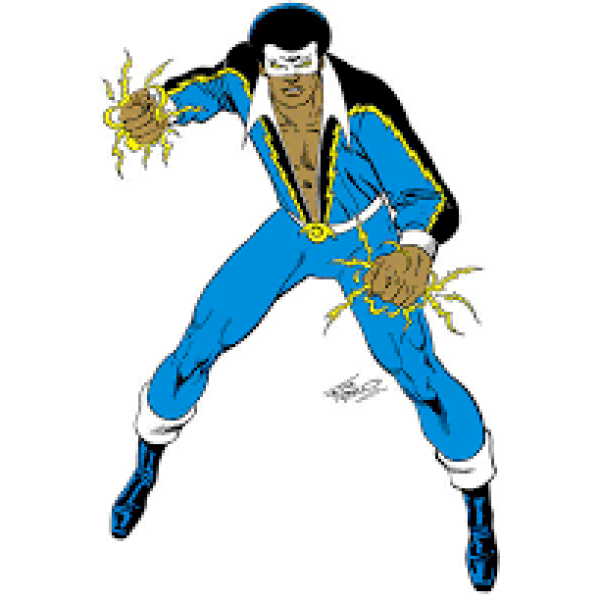
Created by writer Tony Isabella artist Trevor Von Eeden, Black Lightning was introduced to comic readers in 1977. The first African American to headline a DC title, the hero, a man named Jefferson Pierce, has the ability to create and manipulate electricity. The character has been featured in animated film and series and video games, and headlined his own television program on The CW from 2018-2021.
| Black Lightning’s Comic History Black Lightning, DC’s first completely original black superhero to headline his own self-titled series, showed up for the first time in Black Lightning #1 in 1977, the career-defining creation of series writer Jenny Isabella. He was very different in his original incarnation; He had no superpowers at first. By the second issue, he started using electrical charges generated by an electromagnetic belt, but at first he was just a teacher and former Olympic athlete who chose to create a heroic identity to protect his city from the 100, a criminal organization, and their leader crime lord Tobias Whale. The Lightning theme of his heroic identity was just that; a theme. It was based on a poem he had written when he was younger. While this series was being published, The ongoing animated series Superfriends looked to add a black character to its second season. Licensing agreements with Jenny Isabella prevented Black Lighting from appearing, so instead they used “Black Vulcan”, another lightning-wielding black person, who was… at least legally distinct? |
| What’s notable about Black Vulcan is that he was much more liberal in his use of his powers… just like everyone on that show. When Black Lightning appeared next in 1983’s Batman and the Outsiders, he was still more into punching people, but you started to see him use his electrical powers more often. After a small hiatus, when his second solo series started in 1995 he was WAY more into his electrical powers, with charges cascading off of him practically full time. This would later be retconned back into his origin, making him a metahuman with electrical powers the whole time. There was a brief period here where we didn’t see much of Jefferson until he turned up as president Lex Luthor’s secretary of education. (part of the appeal of that story was that Luthor actually appeared to be doing a good job as president, selecting extremely qualified people for his cabinet) Eventually, Luthor’s term as president ended when he was revealed to, surprise surprise, actually still be evil. This was followed by a new Justice League series where Jefferson finally took the place he had turned down back in his original run, and became a full-time Justice League member. During this new resurgence in popularity, we got an absolutely stellar six-issue miniseries in 2009; Black Lightning: Year One, by Jen van Meter. She just knocked it completely out of the park with her worldbuilding, creating a fantastic take on the world of Southside Metropolis and Jefferson’s place in it, turning him into a modern-day folk hero. More than anything else, this is the character we really want to dig into. | ||
| Black Lightning’s Comic History Black Lightning, DC’s first completely original black superhero to headline his own self-titled series, showed up for the first time in Black Lightning #1 in 1977, the career-defining creation of series writer Jenny Isabella. He was very different in his original incarnation; He had no superpowers at first. By the second issue, he started using electrical charges generated by an electromagnetic belt, but at first he was just a teacher and former Olympic athlete who chose to create a heroic identity to protect his city from the 100, a criminal organization, and their leader crime lord Tobias Whale. The Lightning theme of his heroic identity was just that; a theme. It was based on a poem he had written when he was younger. While this series was being published, The ongoing animated series Superfriends looked to add a black character to its second season. Licensing agreements with Jenny Isabella prevented Black Lighting from appearing, so instead they used “Black Vulcan”, another lightning-wielding black person, who was… at least legally distinct? | ||
| What’s notable about Black Vulcan is that he was much more liberal in his use of his powers… just like everyone on that show. When Black Lightning appeared next in 1983’s Batman and the Outsiders, he was still more into punching people, but you started to see him use his electrical powers more often. After a small hiatus, when his second solo series started in 1995 he was WAY more into his electrical powers, with charges cascading off of him practically full time. This would later be retconned back into his origin, making him a metahuman with electrical powers the whole time. There was a brief period here where we didn’t see much of Jefferson until he turned up as president Lex Luthor’s secretary of education. (part of the appeal of that story was that Luthor actually appeared to be doing a good job as president, selecting extremely qualified people for his cabinet) Eventually, Luthor’s term as president ended when he was revealed to, surprise surprise, actually still be evil. This was followed by a new Justice League series where Jefferson finally took the place he had turned down back in his original run, and became a full-time Justice League member. During this new resurgence in popularity, we got an absolutely stellar six-issue miniseries in 2009; Black Lightning: Year One, by Jen van Meter. She just knocked it completely out of the park with her worldbuilding, creating a fantastic take on the world of Southside Metropolis and Jefferson’s place in it, turning him into a modern-day folk hero. More than anything else, this is the character we really want to dig into. |
Hill is making the most of his five-issue tenure as writer of Detective Comics. He has introduced a brand new villain, teamed Batman up with Black Lightning, and laid the foundation for a new team of Outsiders. That’s a lot of bat for the buck, and that alone would make these stories worth checking out. But Hill has a secret weapon: he knows what makes Bruce Wayne tick. Despite all of the heavy lifting being done around the Bat-family in Detective Comics, Hill has a knack for putting a new spin on Batman’s well-worn drive and motivation, and he clearly has a tremendous love for the history of the character.
The first Outsiders came together by chance, shortly after Batman resigned from the Justice League. This was due to Wayne Enterprises CEO Lucius Fox being taken hostage after war broke out in the nation of Markovia. With the League being restricted from getting involved in international incidents, Batman couldn’t count on them in rescuing his friend.
Batman partnered with Black Lightning, but the two encountered unexpected allies in their battle with the despot Baron Bedlam. These included the assassin Katana, an amnesiac girl with light powers Batman named Halo, the element man Metamorpho, and the earth-shifting Geo-Force. Once Lucius Fox was rescued, Batman decided to continuing working with the new heroes, offering them his training and support.