
Introduction
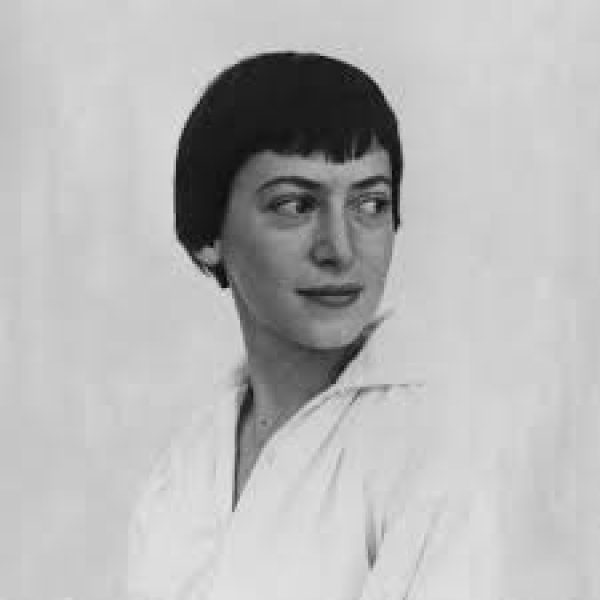
Ursula Kroeber Le Guin (1929-2018) was a celebrated author whose body of work includes 23 novels, 12 volumes of short stories, 11 volumes of poetry, 13 children’s books, five essay collections, and four works of translation. The breadth and imagination of her work earned her six Nebula Awards, seven Hugo Awards, and SFWA’s Grand Master, along with the PEN/Malamud and many other awards. In 2014 she was awarded the National Book Foundation Medal for Distinguished Contribution to American Letters, and in 2016 joined the short list of authors to be published in their lifetimes by the Library of America.
—
Ursula Kroeber was born in 1929 and grew up in Berkeley, California. Her parents were anthropologist Alfred Kroeber and writer Theodora Kroeber, author of Ishi. She attended Radcliffe College and did graduate work at Columbia University. She married historian Charles A. Le Guin, in Paris in 1953; they lived in Portland, Oregon, beginning in 1958, and had three children and four grandchildren. Le Guin died peacefully in her home in January, 2018.
Few American writers have done work of such high quality in so many forms. Her oeuvre comprises 23 novels, 12 volumes of short stories and novellas, 11 volumes of poetry, 13 children’s books, five collections of essays, and four volumes of translation. Le Guin’s major titles have been translated into 42 languages and have remained in print, often for over half a century. Her fantasy novel A Wizard of Earthsea, the first in a related group of six books and one short story, has sold millions of copies worldwide.
Le Guin’s first major work of science fiction, The Left Hand of Darkness, is considered groundbreaking for its radical investigation of gender roles and its moral and literary complexity. Her novels The Dispossessed and Always Coming Home redefine the scope and style of utopian fiction. Le Guin’s poetry drew increasing critical and reader interest in the later part of her life; her final collection of poems, So Far So Good, was published shortly after her death.
Among many honors her writing received are a National Book Award, seven Hugo Awards, six Nebula Awards, the Howard Vursell Award of the American Academy of Arts and Letters, the PEN/Malamud Award, and the National Book Foundation Medal for Distinguished Contribution to American Letters. In 2000, she was named a Living Legend by the Library of Congress, and in 2016 she joined the short list of authors to be published in their lifetimes by the Library of America. Three of Le Guin’s books have been finalists for the American Book Award and the Pulitzer Prize.
Literature Review
A Wizard of Earthsea (1968)
We arrive in Gont, a part of the archipelago known for goat herders and we meet a young boy whose mother named him Duny before she died. He’s the youngest of the local blacksmith and left to raise himself. He overhears his aunt who hasn’t had much to do with him say something to the goats and he repeats it only for the magic to go awry and her to realize he has a talent for it within him and take him under her wing and teach her what she knows. The book seems to suggest that because she is just a small time witch, a local villager who wasn’t traditionally trained, that while her magics aren’t necessarily good or with good intentions she can’t really be blamed because she wasn’t formally taught how to be in balance in the world and will always be self-serving. But she does teach him a few true names and he is able to summon birds to him.
Foreigners, raiders, white barbarians, come to their shore prepared to destroy and pillage their village and Duny realizes he can, maybe, create an illusion to give their village a fighting chance of survival. But because he also isn’t formally trained he exhausts himself and becomes ill. It works however and word travels fast across the archipelago about this boy with latent power.
Up to this point many have vied for Duny’s attention as a possible apprenticeship, but a grand wizard who goes by Ogion comes to offer Duny an alternative outside of his small village, the chance to apprentice as a wizard. He gives Duny time to think about it and promises to return for his naming ceremony when he comes of age. Duny is excited at the prospect of being powerful and famous and the thought of the adventure that comes with apprenticing under Ogion, a wizard who quelled earthquakes and commands respect wherever he goes. It’s a no-brainer for him.
Ogion returns and names Duny his true name, Ged. And while traveling and apprenticing which Ged learns absolutely nothing except basic education like reading and writing. He becomes bored but gains the nickname Sparrowhawk from summoning birds to him.
Ged is prideful. He wants so much more. And any time someone suggests that maybe he isn’t as powerful as he thinks he is and is truly just an illusionist his pride bubbles up which leads him down a dark path. This path leads to a very dark book that he doesn’t know how to read with a spell in it to bring the dead to the world of the living.
Eventually through mistakes and due to a prideful thirst for knowledge that he doesn’t feel like is being fulfilled Ged, with Ogion’s permission, heads out of the mountains towards Roke to go to wizard school. Here his pride earns him enemies and eventually leads to his folly but his talent earns him praise from teachers and awe from classmates.
Ged however isn’t done courting death and through his hubris and to one-up a rival he creates a hole in the universe and unleashes a great darkness and becomes greatly ill, again.
This curbs Ged’s foolish pride and makes him look at himself and magic and the harping of teachers like Ogion to the ones at his school about balance as a true thing that is needed and how the ego has to be set aside for the greater good. It slows down his learning and he falls behind from his friends who graduate and leave.
Duny is a young boy living in an archipelago of islands known as Earthsea, and his particular island of Gont produces many talented wizards. Duny’s aunt notices that he has an unusually strong gift for magic, and she takes him on as an apprentice magician.
Duny learns the true names of many animals, which allows him to call them to him at will. Since he is always surrounded by birds of prey, the village children call him Sparrowhawk, a name he continues to use for much of his life.
When Duny is 12, soldiers from the Kargad Empire sail to Gont and attack his village. Duny cleverly shrouds the whole village in a thick mist, fooling the attackers. Rumor of Duny’s great achievement spreads, and a wise mage named Ogion arrives to take Duny as his apprentice and give him his true name: Ged.
Ged learns Hardic runes from Ogion, runes that will enable him to learn the Old Speech, the language where all things are called by their true names. One day, a girl asks him about his magic abilities, wondering if he can summon the spirits of the dead. In an attempt to learn a spell to impress the girl, Ged sneaks and reads Ogion’s lore books.
This spell accidentally summons a shadow creature, which must be banished by Ogion. Ogion realizes that Ged wants to learn more complicated magical arts, so he offers him the choice of going to the big city of Roke to attend a magical academy, an option that Ged readily accepts.
At the magic school, Ged meets Archmage Nemmerle and applies himself to his studies. Ged’s pride and unbending nature make it difficult for him to connect with other students. He makes only one friend, Vetch, and also makes one true enemy, Jasper. As Ged learns more and more magic, Jasper taunts him to prove his skills by demonstrating a feat of great power, such as summoning a spirit from the dead.
Ged is overwhelmed by pride in his own abilities and attempts to raise the spirit of a famous deceased woman. Instead, an evil shadow creature slips through a rip in the fabric of the universe and attacks Ged. Archmage Nemmerle drives away the shadow but dies from the effort. Ged is badly injured.
After several months of recovery, Ged is healed enough to walk outdoors again and swear fealty to Gensher, the new Archmage of the school. Gensher urges him to study well because the evil creature he unleashed is waiting for him outside of Roke and will possess him if he does not grow strong enough to withstand it.
Ged lacks his former strength and confidence. He is no longer a star pupil. Still, he passes all his training and, at about 18 years old, he becomes a full wizard and leaves to become the wizard of a town called Low Torning.
Low Torning needs a wizard because their little collection of islands is close to the island of Pendor, where a brood of nine dragons lives. They fear that when the eight younger dragons reach adulthood, they will attack the nearby people. They want Ged to be their protector.
Ged travels to Pendor to kill the dragons so he can complete his duty toward the villagers and leave to confront the shadow. He kills five of the younger dragons. Then the father of the group negotiates with him. Ged says that if the great dragon will swear never to fly east of Pendor to the islands, Ged will not attempt to control or destroy him by invoking his real name, Yevaud.
The great dragon offers Ged jewels and also offers to tell Ged the name of the shadow that hunts him. Ged is deeply tempted to seek his own benefit and make a deal with Yevaud, but instead, uses his influence over the dragon to protect the people of the islands.
After Ged defeats Yevaud through wit, Ged travels toward Roke. Rumor of his great deeds spreads throughout the islands. However, he finds that his passage to Roke is blocked because spells around Roke prevent evil from entering — where Ged goes, his shadow follows. A stranger on an island tells him to go to the Court of the Terrenon in Osskil to gain something that will help him defeat his shadow. In Osskil, the shadow possesses the body of one of Ged’s shipmates and attacks him.
Ged runs away and stumbles into the Court of the Terrenon. There, he meets a woman named Serret. The Terrenon is an ancient jewel rumored to be as old as the world itself. Serret says if Ged touches the jewel, it can tell him how to defeat his enemy.
Ged refuses to touch it. When Serret tries to persuade him to change his mind, he realizes that she and her husband want to let the Terranon possess him so they can use his magical powers. He also discovers that Serret is the girl he tried to impress in Gont as a young boy. Small flying monsters attack Ged as he flees the court, but he turns into a falcon and flies to Gont.
Ged goes to Ogion in falcon form, but he forgets his true self. Ogion helps Ged turn back into a human and suggests that he stop running and confront his shadow. Ged sails out onto the ocean and asks his shadow to meet him. He chases the shadow, nearly catching it several times. On the isle of Iffish, he meets his old friend Vetch, who insists on traveling the last part of the journey with him.
They sail to the farthest southeast island in the world, and then sail even farther eastward into the uncharted ocean. When Ged finally meets his shadow, he calls it Ged and embraces it. He later tells Vetch that he is whole and free, and he cries in relief because the shadow was a part of himself all along, a part that he has now finally accepted.
Earthsea is a collection of islands and that is this world. There is a belief that beyond these islands is the end of the world but because it is an old fantasy world the people of the archipelago are avid sailors, or at least many many of them know how to sail. Magic exists within different frames. Witches are easily found in villages as are sorcerers, but wizards with their staffs are considered highly respected in most of the archipelago and are trained in a well-protected island called Roke where the school of wizardry (seems to be a school for only boys). There is darkness within the world and evil old gods as well as a strong need for balance. The levels of magic change: there are small charms and illusions that any villager sorcerer or witch can do then there’s more complex magic like transforming themselves into another creature. All people are born with a name given by their parents, but then when they reach a certain age (differing by character and culture) when they are to grow up and become an apprentice and prepare for a career and a life they are given their true name. Like fey rules, they have to keep this name close to their chest and not share it with anyone except those they truly trust, or others will be able to use it to control them
The Tombs of Atuan (1970)
We meet another small child at a very young age. This time a girl named Tenar. She is introduced well-loved by her mother but with her father being cautious to extend love towards her because they will not get to keep her. She is taken, at a very young age, to become the Priestess of the Tombs. She is taken to lives among the high priestesses of The Place until she is taken for a ceremony in The Hall of the Throne to be renamed as Arha or “the eaten one”. The people of Atuan where she lives believe in a God-king and there are a few older gods like the ones she’s in charge of. They believe that high priestesses are reincarnated. So whenever a high priestess dies the priestesses and their servants (eunuchs and slaves) head out across the land in search of a baby girl born around the same time as the priestesses death and if she’s in good health she is brought back and trained or “reminded” of her job and her past lives serving the gods she had served before. Arha is in charge of the Nameless Ones and is the only one allowed in the Tombs the temple grounds. Here it is always dark and there is a labyrinth filled with riches but only herself and the occasional assistant is allowed to traverse down there.
Because Arha serves the oldest gods, specifically the Nameless Ones, she’s technically, despite her young age, one of the more important and higher ranking priestesses within the temple. However, this also brings her within the ire of older priestesses who serve the god-king and do not really believe in the old gods. It means she cannot be punished but if she tries to bring others with her to do what she wants to do, like skip chanting, they will be punished doubly while she is left alone.
Traversing the labyrinth and the Tombs of Atuan bring Arha joy. There’s not much else to do and she’s bored easily. Plus she knows a long time of the same old same old stretches out before her and most likely forever, as she is expected to constantly be reincarnated. Her guides, older priestesses tell her that occasionally people, men or wizards, try to break into the tombs in search of great treasures and she wonders about it until one day it happens and she finds a wizard bringing light, which is forbidden, into the tombs. He is in search of half of the ring of Erreth-Akbe. She traps him in the tombs and seems to be at odds with herself. It is her duty to make sure anyone who enters the tombs is punished severely with death. But instead, she plays cat and mouse with the wizard, watching and calling to him from above in the temple at various spy holes and trying to keep him alive.
Eventually, she gets to know Ged and to better understand herself and the darkness within the gods she’s the priestess of and the world beyond the temple walls from conversations with Ged.
It’s an interesting story because to an extent she is similar to Ged as a child. She is a young woman severely unsocialized and given a high position without a change in her scenery. She’s essentially a prisoner but a comfortable, prideful and very bored one who doesn’t realize she is stuck and has no desire to see life beyond the walls.
The Eaten One’s Fate
Tenar’s life is predetermined
As a child, Tenar is taken from her family to become the Priestess of the Nameless Ones in the Tombs of Atuan. Her identity is stripped away, and she is renamed Arha, “the Eaten One,” symbolizing her complete devotion to the dark powers she serves. Her life is one of ritual and isolation, bound to the ancient traditions of the Tombs. Despite her high status, she is trapped in a life of darkness and duty, with little understanding of the world beyond the desert that surrounds her.
Darkness and Discovery
Tenar’s world is challenged
As Tenar grows, she becomes more aware of the limitations and emptiness of her role. Her curiosity about the world outside the Tombs grows, and she begins to question the power and purpose of the Nameless Ones. Her life takes a turn when she discovers a stranger, Ged, in the Undertomb. He is a wizard from the Archipelago, seeking the lost half of the Ring of Erreth-Akbe, a powerful talisman. His presence challenges everything Tenar has been taught to believe.
The Labyrinth’s Secrets
Ged’s quest and Tenar’s choice
Ged is trapped in the Labyrinth, a maze of tunnels beneath the Tombs, and Tenar must decide whether to help him or let him die. As she learns more about Ged’s quest and the significance of the Ring, she is torn between her duty to the Nameless Ones and her growing sense of compassion and curiosity. Ged’s presence awakens a desire for freedom and knowledge within her, and she begins to see the Nameless Ones as oppressive rather than divine.
A Thief in the Dark
Ged’s capture and Tenar’s dilemma
Tenar captures Ged and holds him prisoner, but she is intrigued by his stories of the world beyond the Tombs. Ged tells her of the Archipelago, dragons, and the power of true names. He reveals that the Ring of Erreth-Akbe, once whole, can bring peace to the world. Tenar is faced with a choice: remain the servant of the Nameless Ones or help Ged complete his quest and find her own path to freedom.
The Ring’s Reunion
The Ring is made whole
Tenar decides to help Ged, and together they find the missing half of the Ring in the Great Treasury of the Tombs. Ged uses his magic to mend the Ring, restoring its power. This act symbolizes Tenar’s break from the Nameless Ones and her embrace of a new identity. The Ring’s reunion is a turning point for both Tenar and Ged, as it represents hope and the possibility of a new beginning.
Escape from the Tombs
Fleeing the darkness
With the Ring restored, Tenar and Ged must escape the Tombs before the Nameless Ones exact their vengeance. As they navigate the Labyrinth and the Undertomb, the ancient powers awaken, threatening to destroy them. Ged’s magic and Tenar’s knowledge of the Tombs guide them to safety, but not without loss. The collapse of the Tombs marks the end of Tenar’s old life and the beginning of her journey into the unknown.
Journey to Freedom
A new path unfolds
Tenar and Ged travel through the desert and mountains, heading toward the sea and the Archipelago. Along the way, Tenar grapples with her past and the guilt of her actions as the Priestess. Ged reassures her that she is free to choose her own path and that the darkness of the Tombs no longer holds power over her. Their journey is one of healing and discovery, as Tenar learns to trust herself and embrace her new identity.
A New Beginning
Embracing a new life
As they reach the sea, Tenar faces the vastness of the world and the uncertainty of her future. Ged promises to take her to Havnor, where she will be welcomed and honored for her role in restoring the Ring. Though she is afraid, Tenar is determined to find her place in the world. The journey across the sea symbolizes her transition from the darkness of the Tombs to the light of a new life, full of possibilities and freedom.
The Farthest Shore (1972)
We are back on Roke, this time with Arren who is a young prince who has come to try and speak with the archmage about the magic that seems to be escaping the world and the land at a frighteningly fast pace. Wizards have forgotten their skills, spell weavers cannot weave their spells, witches have forgotten their charms, and discord seems to be filling the land. The archmage meets Arren in the courtyard by a pond and Arren is absolutely smitten. He no longer wishes to return home, he wants to stay by the archmages side and protect him. He quickly offers his services and to follow the archmage wherever he may need to go.
Sparrowhawk, Ged, summons the leaders of the school, the masters of their craft and listens to them debate the failing magic of the world and what they think is happening and then tells them he shall set out in search of the source and try to fix it. He is after all not meant to be stuck in one place and it seems like a good excuse to flex his wings and leave the safe but walled city of Roke. They clamor to offer to join him but he declines them all instead choosing to take Arren up on his offer and they set off in his faithful ship, Lookfar.
Together Arren and Sparrowhawk travel the archipelago and find apathy and danger around every corner. People and places that thrived and were safe and filled with magic when Sparrowhawk was younger are now dangerous and the people have forgotten all of their drive, kindness, and skills. They’ve fallen on hard times or into drugs to escape life and death. Around every corner is a temptation to fall into a similar state. The loss of magic follows closely on their heels in every space where they find magic struggling to survive. Singers forget their songs, dancers forget the steps, artisans forget their art, and people are irritable and distrusting.
Arren and Sparrowhawk find dragons and people who’ve given up living on land and nothing is untouched by this ending until they land on the farthest land known to Earthsea where they must take a stand against shadows and face that death itself is what makes life so precious, and to discard one ruins both as well as the balance of the whole world.
The entire series was really well done and seemed to press on making sure the reader understands balance, to strive to learn, and an acceptance that one day we will all die.
This isn’t the first book I’ve read or even the first series that seems to try and help the reader with mortality and comfort them about the inevitable. However, I find these types of books rather melancholy. Peaceful yes but quiet and melancholy and a little sad. Sure there’s plenty of adventure but when a lot of time is glossed over and we learn about a character’s past in only a sentence or two, I guess I get bummed. I was expecting to follow Ged through all of his adventures that people write songs about but we only got a few and we watched him through others’ eyes during most of the important moments of his life. Which might be the point. We’re like a random villager in Earthsea hearing about it second hand through the songs sung about heroes and wizards and the epic tales of the world, but it’s just kind of sad to go from being with Ged every step of the way to suddenly sitting on the sidelines with other characters. Though with how quiet and introspective he gets with his age it might be for the best.
A surreal coming-of-age story that’s also simultaneously a retirement story. Ged, aka Sparrowhawk, is now Archmage of the Great House of Roke. And he faces a new challenge – magic is disappearing from the world. The mages are forgetting their spells and their words of power, and no one seems to know why. As Ged voyages off to find the cause of these events, he is accompanied by Arren, a young prince of Aragornly heritage.
“…but he felt the Archmage’s touch as a thrill of glory. For Arren had fallen in love.”
The relationship between Ged and Arren at times gave me inappropriate feels (from Arren’s end), but I don’t know if that’s me being a prude about Le Guin’s broader definition of love or what. Ged’s Dumbledore-like reticence was also annoying at times because I really do feel that communicating clearly with one’s companion is likely to get you better results than anything else.
Their adventures in search of the mysterious evil that is blanking out all that is magic in the world take them to some odd places, including a fully aquatic nomadic village constructed on rafts. The communities and societies that Le Guin so painstakingly constructs are interesting to read about, but everywhere the story remains the same – the magic has been taken away, and only hopelessness, despair, and zombies remain.