
Introduction
Brian Cosgrove and Mark Hall met sometime in the 50s when they both attended Manchester College of Art & Design. After graduating they both spent a period of time producing graphics for Granada Television though seemingly Hall at least had higher aspirations than this as he left in the early 70s and formed his own company, Stop Frame Productions. Cosgrove joined him not long afterwards. Together they began to produce a series called The Magic Ball which they filmed in one of their garden sheds. I managed to find a couple of episodes online. The animation was very basic but they were quite entertaining.
There were some very enjoyable and peculiar storylines, foreshadowing some of the absurdity that was to come later. They did a few other series as Stop Frame Productions as well as producing the opening titles and some of the inserts for Rainbow. It was that shows producer, Thames Television, who later hired Cosgrove and Hall once Stop Frame Productions closed down. A subsidiary animation company was created for them and thus Cosgrove Hall Films was born.
They played a huge part in British animation during the eighties, producing some of its most memorable cartoons and achieving worldwide recognition for a few of them. Sadly in 2008 due to lack of funding, ITV decided it was no longer able to invest in Cosgrove Hall. The majority of the staff was made redundant and the remaining few were relocated to an office in Granada Studios. The next year the studio was put under review by ITV and was disbanded.
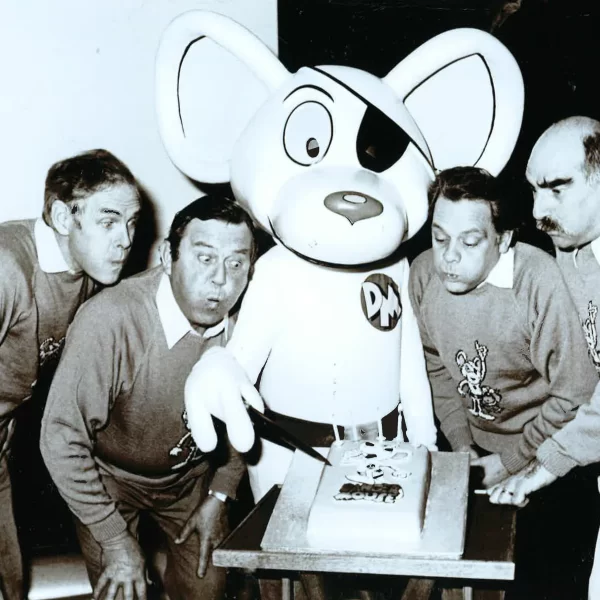
Danger Mouse has to be Cosgrove Hall’s most recognizable cartoon. It was definitely the most successful, being one of the first British cartoons to really break America. It ran for ten series over eleven years and has since been shown in over 70 countries. The original episodes were quite short, around five minutes each, but as the series grew in popularity so did the running time. The later episodes lasted up to twenty-two minutes each and, in my opinion, didn’t quite capture the greatness of the shorter ones. It was still a wonderful cartoon, much better than a lot of others around the same time but it felt like the plotlines were being stretched out over way too much time.
Literature Review
Synopsis:
Danger Mouse follows the adventures of the world’s greatest secret agent, Danger Mouse, who is a daring and resourceful mouse. Alongside his loyal but somewhat clumsy sidekick, Penfold, Danger Mouse takes on various missions to protect the world from a host of villains. The duo operates from their secret headquarters in a postbox on Baker Street, London. Their main adversary is the evil toad, Baron Silas von Greenback, who constantly hatches plans to take over the world. With the help of their boss, Colonel K, and a range of high-tech gadgets, Danger Mouse and Penfold navigate through thrilling escapades, facing off against a variety of quirky foes. The show is filled with action-packed sequences and clever problem-solving as Danger Mouse strives to keep the world safe from danger.
The baddie in the show was the hoarse-voiced Baron Greenback who was always planning something. He was accompanied by an odd little furry caterpillar-type thing that sat on his desk (once again, it’s strange how things like that stay in your mind) which it seems was called Nero, and his useless henchman Stiletto. Also occasionally appearing in the show was Count Duckula who would get his own spin-off cartoon on CITV which was equally enjoyable and I’ll review that soon.
Danger Mouse eventually ran for ten series over a decade and it became one of the most popular shows in the history of CITV, and it was also shown across the world. Throughout the 80s there was also lots of merchandise released featuring the characters including comics, games and books, and DM even appeared on the cover of Lookin, what an honour that is.

Count Duckula
Count Duckula first aired on September 6th, 1988, bringing a fresh and humorous take on the vampire genre to British television. The series was a spin-off from the popular Danger Mouse show, where Count Duckula first appeared as a villain. Created by Brian Cosgrove and Mark Hall of Cosgrove Hall Productions (Danger Mouse), Count Duckula quickly became a much-loved series in its own right. The series was produced with Thames Television and enjoyed success in the UK and internationally, particularly in the United States and Canada.
The concept behind Count Duckula was clever and original: the eponymous character is the latest in a long line of vampire ducks. However, due to a mishap involving ketchup instead of blood during his resurrection, Count Duckula is a vegetarian who prefers broccoli sandwiches over the traditional vampiric fare. This twist set the tone for the series, which combined elements of horror, comedy, and slapstick.
The series ran for four seasons, with 65 episodes, before concluding in February 1993. Although the show ended, it left a lasting impression on audiences and remained a nostalgic favourite for many who grew up during that era. Unlike many animated series, Count Duckula has not been rebooted or remade, which has helped to preserve its unique charm and 1980s aesthetic.
Characters
At the heart of Count Duckula is the titular character, Count Duckula, a far cry from the traditional vampire archetype. Duckula is a cowardly, fame-obsessed vegetarian who dreams of being a superstar rather than a fearsome vampire. His character is defined by his constant attempts to avoid the expectations of his vampiric lineage, leading to numerous comedic situations.
Supporting Duckula is his long-suffering but loyal butler, Igor. A traditional vampire servant, Igor is deeply disappointed in his master’s vegetarianism and lack of malice. His morose personality and dark humour perfectly counter Duckula’s energetic and often foolish antics.
Nanny, the third member of the main cast, is an enormous and dim-witted hen who serves as Duckula’s housekeeper. Despite her clumsiness and tendency to cause chaos, Nanny fiercely protects Duckula and has a heart of gold. Her physical comedy and exaggerated motherly instincts contribute significantly to the show’s humour.
The show also features recurring villains, such as Dr. Von Goosewing, a bumbling vampire hunter who constantly tries (and fails) to destroy Duckula, believing him to be a traditional vampire. Goosewing’s ineptitude and Duckula’s lack of actual vampiric abilities make their encounters a source of consistent comedy.
Plotlines
Count Duckula follows an episodic format, with each episode presenting a new adventure or misadventure for the characters. Familiar plotlines include Duckula’s various schemes to achieve fame and fortune, often involving travel to exotic locations like Egypt or the Wild West, where he hopes to find hidden treasures or ancient secrets. However, these plans invariably go awry, leading to humorous situations.
The series also explores the tension between Duckula’s vegetarianism and vampiric heritage. Igor’s repeated attempts to turn Duckula into a “proper” vampire by exposing him to traditional vampire activities, such as drinking blood or sleeping in a coffin, are often central to the plot. These efforts, however, are constantly thwarted by Duckula’s aversion to all things traditionally vampiric.
Another recurring theme is the comedic failure of Dr. Von Goosewing’s attempts to eliminate Duckula. Each of Goosewing’s plans is more ridiculous than the last, often involving outlandish gadgets and inventions that backfire spectacularly
