
Background Introduction
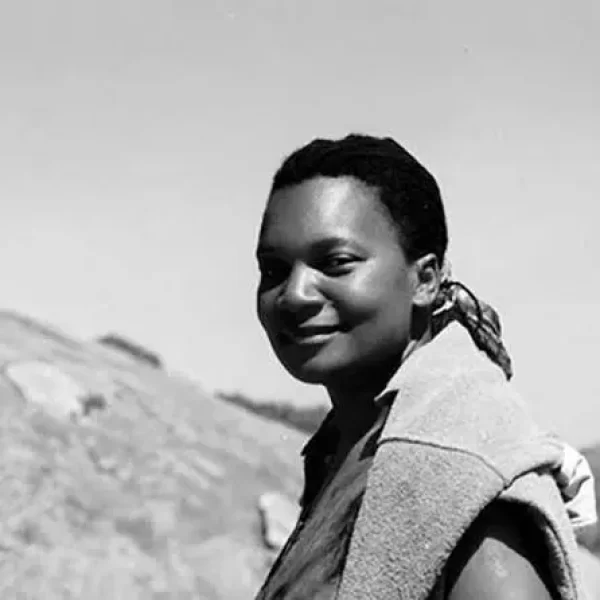
Yvonne Vera, one of the most outstanding novelists in Zimbabwe retells the agonies that women experienced in a male–dominated society and presents us with the most chaotic moment in Zimbabwe‘s history. She daringly confronts the taboo topic in Zimbabwe – the 1980 genocide. Her poetic writing style has gained her international readership and literary critiques. By employing ecological literary critique, also known as ecocriticism,colonialism and nationalism.
Zimbabwean novelist Yvonne Vera is one of the most successful women writers from southern Africa. According to Ranka Primorac, Vera is an ethnic Shona who had grown up in Matabeleland but moved to Canada in order to obtain her doctorate. She returned to her homeland and worked as the director of Bulawayo‘s National Gallery until she passed away at an early age. In 1992, she made her debut in literature by publishing her short story collection titled Why Don’t You Carve Other Animals. Since then, she has published five novels: Nehanda (1993), Without a Name (1994), Under the Tongue (1996), Butterfly Burning (1998) and The Stone Virgins (2002). At the time of her passing–away, she was working on her new novel named Obedience. Her novels are published in her homeland Zimbabwe, Canada, USA and several other countries. They are also translated into Italian, Spanish, Swedish and accordingly have gained her international readership as well as multiple prices in literature (Primorac 2002:101).
Zimbabwe is a landlocked country in the southern part of the continent of Africa, began as a part of the British crown colony of Rhodesia in the 1880´s when the British and the British South African Company (BSAC) were settled in there (Sibanda 2005:18–19). The intruders then promoted a series of colonisation actions on the land including a concession for mining rights as well as control over labour and precious metals and other resources (Bryce 2007:170). The name ―Rhodesia‖ was adopted in 1895 for the territory of Zambesia (Steward 1996:226). In 1898 ―Southern Rhodesia‖ became the official name for the region south of the Zambezi, which now became Zimbabwe while the northern part of the region was named Northern Rhodesia, which is known as Zambia currently (Gary 1956:78). The Shona, the major ethnic group in Zimbabwe, of which Vera is also a member, along with the Ndebele comprise the dominant majority in the country. The Shona performed unsuccessful revolts in 1896 and 1897, also known as Chimurenga, against the British
colonizers, which resulted in loss of many lives. This historical moment is documented by Vera in the beginning of Butterfly Burning, the hanging of the seventeen black men (Primorac 2002:102.). In 1965, after years of fighting against the British colonizers, the white–minority Rhodesian government made a Unilateral Declaration of Independence from the United Kingdom and consequently declared a republic in 1970. A civil war started with black Zimbabwean leaders Joshua Nkomo‘s ZAPU (Zimbabwe African People‘s Union) and Rober Mugabe‘s ZANU (Zimbabwe African National Union) and assistance from its a independent neighbours (Simbanda 2005:161–164.)
“Traumatic Memory and Narrative Memory in Yvonne Vera’s Under the Tongue” focuses on depiction of childhood sexual abuse and some general aspects of the narrative representation of traumatic experiences in Yvonne Vera’s novel Under the Tongue. Yvonne Vera (1964-2005), an award-winning novelist and innovative museum director was the winner of the first Macmillan Writer’s Prize for The Stone Virgins. In 1999, Vera was the recipient of Sweden’s ‘Voice of Africa’ award. In 1997, her novel Under the Tongue won the Commonwealth Writer’s Prize, African Region. She was awarded the Zimbabwean Publisher’s Literary Award for the best novel in 1996 and 1997. She is the author of a collection of short stories Why Don’t You Carve Other Animals(1992) and five novels: Nehanda (1993), Without a Name (1994), Under the Tongue (1996), Butterfly Burning (1998) and The Stone Virgins (2002).Vera’s writings work against the silencing imposed on women by patriarchy and colonialism, and all her novels stress that to write is to banish silence. Vera’s novels are known for their poetic prose, difficult subject-matter, and their strong women characters, and are firmly rooted in Zimbabwe’s difficult past. At the time of her death she was working on a new novel, Obedience. Her works have been published in Zimbabwe, Canada and several other countries,
Literature Review
The novel Under the Tongue is itself an instance of the unveiling of embodied atrocities that girl childhood inscribes. The agony and disorientation suffered by a girl child Zhizha, during and after the brutal rape by her father is the basis of Yvonne Vera’s cumulative tale of unrelieved pain and unspeakable silences. Vera looks at the idea of the rape of the girl child in a situation in which the entire country is engulfed in a war of liberation as rather ironic, but also as something that should place the struggles of traumatized and silenced voices on an equal footing with the national liberation struggles. The structure of the novel shows a succession of singular chapters that alternate in a constant rhythm between first and third person narration. The first-person passages lead us into the “hidden places” of Zhizha, the young protagonist. Close to her narration an auctorial voice unfolds a second narrative trail, following the story of Zhizha’s family: the origins of her father Muroyiwa, his path to the township of Umtali where he met Zhizha’s mother, Runyararo, and where the three of them lived together. As we learn in the end, Zhizha was born ten years before the ceasefire. The third person narration thus fills in the gaps of Zhizha’s narration, it accompanies and backs her and unravels her story from another angle. It mediates between Zhizha’s mental language and the reader, introducing a certain distance and adding an outside perspective to the interior drama we are lead to witness. Zhizha, the child narrator, presents herself as landscape, as an open territory. Her body language is translated into metaphors of water and stone. Her body/soul/spirit landscape is mainly shaped by a river, her tongue, which hides beneath her belly that has turned into a rock due to fear and defense.
Yvonne Vera’s short novel, Without a Name, is set in Zimbabwe/Rhodesia, as the country is in the midst of the struggle for independence.
It was 1977, freedom was skin deep but joyous and tantalizing. (…) Freedom was any kind of opening through which one could squeeze. People fought to achieve gaps in their reality. The people danced in an enviable kind of self-mutilation.
Mazvita has fled her hometown, Mubaira. It is no longer a refuge, a retreat, a home. She hopes to begin anew elsewhere. Harari — the big city — is the obvious place. She recognizes it “as the limitless place in which to dream, and to escape.” Unfortunately, she is not able to escape what happened to her.
In the beginning Mazvita is waiting for a bus:
She stood still. She stood next to one of the poles, on the outside. She stood on the outside. She stood alone.
She remains, ultimately, alone and an outsider, despite apparently adapting and seeming, at times, to fit in well. But events defeat her. Twice she finds men with whom she can share her life. There is Nyenyedzi — but he wants to return with her to Mubaira, and she can’t do that. And then, in Harari, there is Joel.
But Mazvita is pregnant, part of the burden she brought with her from Mubaira. She has the child. It is, of course, not Joel’s and he wants nothing to do with it. And it is ultimately all to much for Mazvita, who finally does the unthinkable.
She came to the city with so much hope:
She trusted the future and her growth and desire. She had faith in untried realities because she trusted her own power for change, for adaptation.
Her own power is not enough. Realities are harsher than she could have anticipated, and the world less adaptable. The city was a place of hope, but she also realizes: “She hated the city and its commitment to a wild and stultifying indifference.”
She is driven to a horrible deed. She drives herself to it. Seeing, under the circumstances, no alternative. It is a wrenching conclusion, heartbreaking and confusing. It is a terrible end Vera’s characters come to. (It is also, in this case, perhaps too stark, an exaggerated manipulation, done for tear-jerking effect. Vera explains a lot, but even so the act does not fully convince.)
The language of the novel veers towards the terse, elliptic, poetic. Fortunately, Vera can not sustain it throughout, and some sensible narrative shines through. It is an uneasy blend, but here, in what is essentially a long short story, she can get away with it.
The characters are mainly simply sketched. The focus is so tightly on Mazvita that the baby, Joel, and even Nyenyedzi remain underdeveloped, shadowy background figures even when they are by Mazvita’s side.
There’s something to the story. It is decently set up, and it certainly hits a nerve. Vera’s flights of language waft too far, but there is some solidity here too. Hardly recommended, but possibly of some interest.
Vera’s representation of Mazvita’s experiences of sexual desire and pleasure is fundamental to her re‐interpretation of freedom in the novel. By “desire” here I refer not only to sexual desire, but, as Drucilla Cornell writes, “what we broadly conceive as our ability to chart out a life that is our own” (Cornell 2003, 145). In her article “Autonomy Re‐Imagined,” Cornell uses psychoanalytic insights to retrieve this “desiring subject” from the Kantian sovereign subject, in order to make a claim for a non‐prescriptive feminist ethics of desire, dignity and autonomy. Cornell differentiates the psychoanalytic notion of “individuation” from rationalist individualism by pointing to the way psychoanalysis acknowledges the “inherently social” nature of desire. “All of us,” she writes, “are transversed by unconscious entanglements with our primary others” (Cornell 2003, 145). Thus we are born as individuals with desires, but they are shaped by these entanglements. The “desiring subject” implies not mastery or extreme individualism but rather anticipation via our “radical imagination,” of possibilities of freedom to come, along with the acceptance of our intersubjective reliance upon others. By contrast, the binary between kinship
In Without a Name Vera posits her pleasure‐seeking heroine, Mazvita, as a ‘desiring subject’ whose strivings reveal the limitations, especially for women, of both the demands of kinship and the expectations of sovereign subjectivity. By showing how her protagonist attempts to negotiate a space of freedom and pleasure that escapes this binary I argue that Vera ultimately advocates the replacement of over‐ determined concepts of freedom within colonialist and nationalist frameworks, with a more free‐ranging and flexible notion of pleasure and desire. Sex scenes in the novel are an important part of Mazvita’s quest. Pleasurable sex scenes between Mazvita and her lover Nyenyedzi in the Zimbabwean rural landscape act as powerful moments of transformation in which the land is recoded as a masculine object of female desire. But Mazvita does not share Nyenyedzi’s untroubled relationship with the land because of her experience of being raped by a Zimbabwean freedom fighter in this same space. What is particularly traumatic about the rape, I argue, is its status as a perverse kinship claim. I read Mazvita’s move to Harare as an attempt to flee both the relatively benign kinship claim invoked by Nyenyedzi in his idealization of the land, and the far more traumatic kinship claim made by the rapist. ckground Introduction
Yvonne Vera, one of the most outstanding novelists in Zimbabwe retells the agonies that women experienced in a male–dominated society and presents us with the most chaotic moment in Zimbabwe‘s history. She daringly confronts the taboo topic in Zimbabwe – the 1980 genocide. Her poetic writing style has gained her international readership and literary critiques. By employing ecological literary critique, also known as ecocriticism,colonialism and nationalism.
Zimbabwean novelist Yvonne Vera is one of the most successful women writers from southern Africa. According to Ranka Primorac, Vera is an ethnic Shona who had grown up in Matabeleland but moved to Canada in order to obtain her doctorate. She returned to her homeland and worked as the director of Bulawayo‘s National Gallery until she passed away at an early age. In 1992, she made her debut in literature by publishing her short story collection titled Why Don’t You Carve Other Animals. Since then, she has published five novels: Nehanda (1993), Without a Name (1994), Under the Tongue (1996), Butterfly Burning (1998) and The Stone Virgins (2002). At the time of her passing–away, she was working on her new novel named Obedience. Her novels are published in her homeland Zimbabwe, Canada, USA and several other countries. They are also translated into Italian, Spanish, Swedish and accordingly have gained her international readership as well as multiple prices in literature (Primorac 2002:101).
Zimbabwe is a landlocked country in the southern part of the continent of Africa, began as a part of the British crown colony of Rhodesia in the 1880´s when the British and the British South African Company (BSAC) were settled in there (Sibanda 2005:18–19). The intruders then promoted a series of colonisation actions on the land including a concession for mining rights as well as control over labour and precious metals and other resources (Bryce 2007:170). The name ―Rhodesia‖ was adopted in 1895 for the territory of Zambesia (Steward 1996:226). In 1898 ―Southern Rhodesia‖ became the official name for the region south of the Zambezi, which now became Zimbabwe while the northern part of the region was named Northern Rhodesia, which is known as Zambia currently (Gary 1956:78). The Shona, the major ethnic group in Zimbabwe, of which Vera is also a member, along with the Ndebele comprise the dominant majority in the country. The Shona performed unsuccessful revolts in 1896 and 1897, also known as Chimurenga, against the British
colonizers, which resulted in loss of many lives. This historical moment is documented by Vera in the beginning of Butterfly Burning, the hanging of the seventeen black men (Primorac 2002:102.). In 1965, after years of fighting against the British colonizers, the white–minority Rhodesian government made a Unilateral Declaration of Independence from the United Kingdom and consequently declared a republic in 1970. A civil war started with black Zimbabwean leaders Joshua Nkomo‘s ZAPU (Zimbabwe African People‘s Union) and Rober Mugabe‘s ZANU (Zimbabwe African National Union) and assistance from its a independent neighbours (Simbanda 2005:161–164.)
“Traumatic Memory and Narrative Memory in Yvonne Vera’s Under the Tongue” focuses on depiction of childhood sexual abuse and some general aspects of the narrative representation of traumatic experiences in Yvonne Vera’s novel Under the Tongue. Yvonne Vera (1964-2005), an award-winning novelist and innovative museum director was the winner of the first Macmillan Writer’s Prize for The Stone Virgins. In 1999, Vera was the recipient of Sweden’s ‘Voice of Africa’ award. In 1997, her novel Under the Tongue won the Commonwealth Writer’s Prize, African Region. She was awarded the Zimbabwean Publisher’s Literary Award for the best novel in 1996 and 1997. She is the author of a collection of short stories Why Don’t You Carve Other Animals(1992) and five novels: Nehanda (1993), Without a Name (1994), Under the Tongue (1996), Butterfly Burning (1998) and The Stone Virgins (2002).Vera’s writings work against the silencing imposed on women by patriarchy and colonialism, and all her novels stress that to write is to banish silence. Vera’s novels are known for their poetic prose, difficult subject-matter, and their strong women characters, and are firmly rooted in Zimbabwe’s difficult past. At the time of her death she was working on a new novel, Obedience. Her works have been published in Zimbabwe, Canada and several other countries,
Literature Review
The novel Under the Tongue is itself an instance of the unveiling of embodied atrocities that girl childhood inscribes. The agony and disorientation suffered by a girl child Zhizha, during and after the brutal rape by her father is the basis of Yvonne Vera’s cumulative tale of unrelieved pain and unspeakable silences. Vera looks at the idea of the rape of the girl child in a situation in which the entire country is engulfed in a war of liberation as rather ironic, but also as something that should place the struggles of traumatized and silenced voices on an equal footing with the national liberation struggles. The structure of the novel shows a succession of singular chapters that alternate in a constant rhythm between first and third person narration. The first-person passages lead us into the “hidden places” of Zhizha, the young protagonist. Close to her narration an auctorial voice unfolds a second narrative trail, following the story of Zhizha’s family: the origins of her father Muroyiwa, his path to the township of Umtali where he met Zhizha’s mother, Runyararo, and where the three of them lived together. As we learn in the end, Zhizha was born ten years before the ceasefire. The third person narration thus fills in the gaps of Zhizha’s narration, it accompanies and backs her and unravels her story from another angle. It mediates between Zhizha’s mental language and the reader, introducing a certain distance and adding an outside perspective to the interior drama we are lead to witness. Zhizha, the child narrator, presents herself as landscape, as an open territory. Her body language is translated into metaphors of water and stone. Her body/soul/spirit landscape is mainly shaped by a river, her tongue, which hides beneath her belly that has turned into a rock due to fear and defense.
Yvonne Vera’s short novel, Without a Name, is set in Zimbabwe/Rhodesia, as the country is in the midst of the struggle for independence.
It was 1977, freedom was skin deep but joyous and tantalizing. (…) Freedom was any kind of opening through which one could squeeze. People fought to achieve gaps in their reality. The people danced in an enviable kind of self-mutilation.
Mazvita has fled her hometown, Mubaira. It is no longer a refuge, a retreat, a home. She hopes to begin anew elsewhere. Harari — the big city — is the obvious place. She recognizes it “as the limitless place in which to dream, and to escape.” Unfortunately, she is not able to escape what happened to her.
In the beginning Mazvita is waiting for a bus:
She stood still. She stood next to one of the poles, on the outside. She stood on the outside. She stood alone.
She remains, ultimately, alone and an outsider, despite apparently adapting and seeming, at times, to fit in well. But events defeat her. Twice she finds men with whom she can share her life. There is Nyenyedzi — but he wants to return with her to Mubaira, and she can’t do that. And then, in Harari, there is Joel.
But Mazvita is pregnant, part of the burden she brought with her from Mubaira. She has the child. It is, of course, not Joel’s and he wants nothing to do with it. And it is ultimately all to much for Mazvita, who finally does the unthinkable.
She came to the city with so much hope:
She trusted the future and her growth and desire. She had faith in untried realities because she trusted her own power for change, for adaptation.
Her own power is not enough. Realities are harsher than she could have anticipated, and the world less adaptable. The city was a place of hope, but she also realizes: “She hated the city and its commitment to a wild and stultifying indifference.”
She is driven to a horrible deed. She drives herself to it. Seeing, under the circumstances, no alternative. It is a wrenching conclusion, heartbreaking and confusing. It is a terrible end Vera’s characters come to. (It is also, in this case, perhaps too stark, an exaggerated manipulation, done for tear-jerking effect. Vera explains a lot, but even so the act does not fully convince.)
The language of the novel veers towards the terse, elliptic, poetic. Fortunately, Vera can not sustain it throughout, and some sensible narrative shines through. It is an uneasy blend, but here, in what is essentially a long short story, she can get away with it.
The characters are mainly simply sketched. The focus is so tightly on Mazvita that the baby, Joel, and even Nyenyedzi remain underdeveloped, shadowy background figures even when they are by Mazvita’s side.
There’s something to the story. It is decently set up, and it certainly hits a nerve. Vera’s flights of language waft too far, but there is some solidity here too. Hardly recommended, but possibly of some interest.
Vera’s representation of Mazvita’s experiences of sexual desire and pleasure is fundamental to her re‐interpretation of freedom in the novel. By “desire” here I refer not only to sexual desire, but, as Drucilla Cornell writes, “what we broadly conceive as our ability to chart out a life that is our own” (Cornell 2003, 145). In her article “Autonomy Re‐Imagined,” Cornell uses psychoanalytic insights to retrieve this “desiring subject” from the Kantian sovereign subject, in order to make a claim for a non‐prescriptive feminist ethics of desire, dignity and autonomy. Cornell differentiates the psychoanalytic notion of “individuation” from rationalist individualism by pointing to the way psychoanalysis acknowledges the “inherently social” nature of desire. “All of us,” she writes, “are transversed by unconscious entanglements with our primary others” (Cornell 2003, 145). Thus we are born as individuals with desires, but they are shaped by these entanglements. The “desiring subject” implies not mastery or extreme individualism but rather anticipation via our “radical imagination,” of possibilities of freedom to come, along with the acceptance of our intersubjective reliance upon others. By contrast, the binary between kinship
In Without a Name Vera posits her pleasure‐seeking heroine, Mazvita, as a ‘desiring subject’ whose strivings reveal the limitations, especially for women, of both the demands of kinship and the expectations of sovereign subjectivity. By showing how her protagonist attempts to negotiate a space of freedom and pleasure that escapes this binary I argue that Vera ultimately advocates the replacement of over‐ determined concepts of freedom within colonialist and nationalist frameworks, with a more free‐ranging and flexible notion of pleasure and desire. Sex scenes in the novel are an important part of Mazvita’s quest. Pleasurable sex scenes between Mazvita and her lover Nyenyedzi in the Zimbabwean rural landscape act as powerful moments of transformation in which the land is recoded as a masculine object of female desire. But Mazvita does not share Nyenyedzi’s untroubled relationship with the land because of her experience of being raped by a Zimbabwean freedom fighter in this same space. What is particularly traumatic about the rape, I argue, is its status as a perverse kinship claim. I read Mazvita’s move to Harare as an attempt to flee both the relatively benign kinship claim invoked by Nyenyedzi in his idealization of the land, and the far more traumatic kinship claim made by the rapist.