
Significance of the Study:
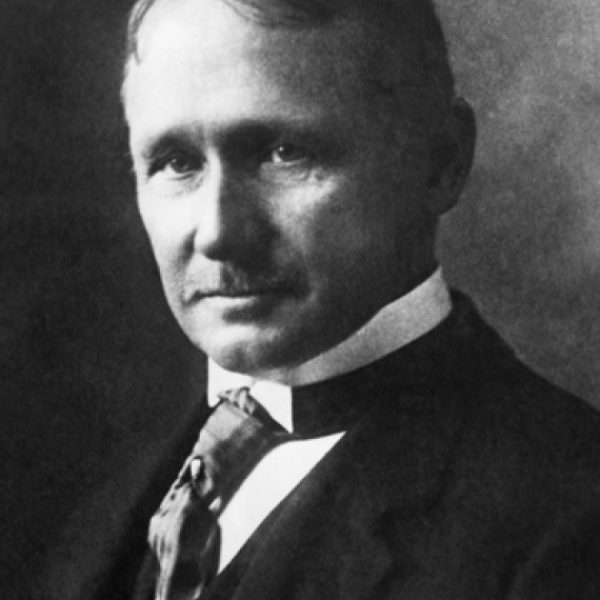
Yevgeny Zamyatin, born in 1884, was a Russian author and playwright known for his groundbreaking contributions to dystopian literature. Born in Lebedyan, Zamyatin studied naval engineering at St Petersburg, a background that heavily influenced his works. Zamyatin’s works often criticized the oppressive nature of the political regimes in his time, exploring themes of individualism and freedom against the backdrop of authoritarian control. Despite facing censorship and exile, Zamyatin left a lasting impact on Russian literature, with his best-known work, “We,” serving as a significant precursor to later dystopian novels.
Dystopia is the opposite of utopia: a state in which the conditions of human life are extremely bad as from deprivation or oppression or terror (or all three). A dystopian society is characterized by human misery in the form of squalor, oppression, disease, overcrowding, environmental destruction, or war.
Literature Review
We unfolds over the course of 40 “Records” written by the novella’s narrator, D-503. The action takes place in the distant future in the One State, a civilization ruled over by an authoritarian government. D-503 works as a mathematician and engineer, and is the lead designer of the Integral, a rocket ship the One State will use to travel to alien planets to spread the doctrine of complete subservience to the government and an absolute reliance on logic, mathematics, and rationality to govern public life. D-503 writes his records to be read by the conquered alien civilizations so that they might have a better understanding of the values and history of their new authoritarian overlords.
A God-like, cruel dictator known as the Benefactor rules over the One State. The Benefactor believes that the freedom of individuals is secondary to the welfare of the State. As such, citizens (called “ciphers”) live under the oppressive, hyper-watchful eye of government-appointed police offers called Guardians. The One State is cut off from the wild, free world by a massive barrier called the Green Wall. Ciphers live in transparent, glass houses. The government rips them of their individuality, forcing them to wear identical uniforms (“unifs”) and harshly condemning all acts of personal expression. Ciphers’ daily lives are precisely organized around a carefully controlled scheduled called the Table of Hours. Even their sex lives are not in their own hands: the State assigns ciphers sex partners, and they must request a “pink ticket” to engage in scheduled, passionless sex with their state-sanctioned partners. Should ciphers break any of the State’s strict laws, they are punished by execution via a mechanical contraption known as the Machine of the Benefactor.
In Yevgeny Zamyatin’s brilliant dystopian novel, We, readers are transported to the highly structured and oppressive future society known as OneState, where individuality and emotions are stifled, and conformity reigns supreme. As the protagonist, D-503, embarks on a transformational journey, his encounters challenge the very foundations of his existence. With poetic prose and haunting imagery, Zamyatin explores the fundamental human desire for freedom against the backdrop of a controlled and regimented world. We invites readers to question the nature of identity, the power of individuality, and the consequences of a society that seeks to erase all traces of humanity. Prepare to be enthralled by this thought-provoking and gripping exploration of the human spirit.
Through his thought-provoking writings, Zamyatin adeptly questioned societal norms and offered readers a unique perspective on the perils of an unfree world.
Shortly after the nascent Soviet government consolidated its power and launched a program of rapid industrialization, Yevgeny Zamyatin’s novel We (1920) scandalously questioned the validity of techno-scientific instrumentality, a central principle of societal transformation in Soviet Russia. The first major work of fiction to be censored by the new regime, the novel was smuggled to the West, translated into English, and became an ur-text of twentieth-century science fiction, in particular standing, alongside Aldous Huxley’s Brave New World and George Orwell’s 1984, as progenitor of a new anti-utopian subgenre warning of the mass cultural homogenization of humanity in the name of progress. Set in a future totalitarian OneState, the novel records the internal conflict and gradual self-awakening of the initially robotlike rocket engineer D-503, torn between his faith in state orthodoxy and yearning for perfect order, on the one hand, and, on the other, his growing awareness of his own disorderly, irrepressible, idiosyncratic subjectivity. The catalyst of this subversive development is the act of writing—paradoxical insofar as this act functions, in the totalitarian system envisioned by the novel, as one of the instruments of the state’s all-pervasive control. In this essay, I will discuss how Zamyatin, in the process of critiquing the man-machine ideal espoused in Soviet political culture, reconceptualizes the very meaning of technology in human life.1 [End Page 108]
The “Question Concerning Technology” and Its Soviet Context
Broadly speaking, twentieth-century cultural responses to the power and expansion of technology foregrounded either the utopia of peaceful human coexistence with and benefit from machines or the dystopia of machine-wrought destruction. In Soviet Russia, intent on quickly overcoming its backwardness and marginal status vis-à-vis the West with the help of machinery at times conceived almost as magical, the predominant mode of relating to technology was emphatically utopic. The wishful thinking of utopian writers was counterbalanced by the paranoid prophesies of dystopians, who envisioned machines turning their power against humanity in a struggle for autonomy. One of the most influential of the technological dystopias, the Czech writer Karel Capek’s drama R.U.R. (1921), left an ominous stamp on Western culture in the form of the word “robot.” Here robots, work machines with an uncanny likeness to humans, in the spirit of rational self-interest they embody, rebel against their subservient status and destroy humanity.2 The vicissitudes of Capek’s plot, however, rely upon the same conception of technology as that of the “dreamer in the Kremlin” Lenin in his utopian aspirations for the Soviet future;3 in either case, it is a tool for political-industrial transformation, for ill or good.4
Zamyatin’s anti-utopian novel establishes a counterpoint to the purely instrumental technologies conceived by technophiles and tech-nophobes alike insofar as the author consistently deprives technology of its defining characteristic in Industrial Age culture, namely, its functionality.5 In its place, We imbues technology with various human traits, transforming machines into great vehicles for reflection. As opposed to the aspirations of Soviet “new men” to become machines, Zamyatin’s text features “reflexive technologies” in which pure instrumentality is marred by human idiosyncrasies.6 In this effort to aesthetically reassess technological potential, to view technology as a medium for contemplation rather than societal change, Zamyatin’s We takes its place within a canon of artistic works that responded to technological advancement with an urge not to exploit but to explore. In the Russian context, for example, Valentin Kataev’s The Sovereign of Iron (1924) features machines that exercise their newly acquired independence from humans by resisting violence, refusing to participate [End Page 109] in mankind’s wars; Velimir Khlebnikov’s “Ourselves and Our Buildings: Creators of Streetsteads” (1914) and other futurist manifestos espouse organic technologies starkly contrasting with the aesthetics of mechanized humanity.
He wrote We in 1920, amid the transformation of Russia after the Revolution: “1920 was perched at the dawn of film, radio, and the automobile. It was also the year the word robot came into being (originating in the Russian and Czech word rabotat’, which means to “work”). The Bolsheviks with their militaristic, urban-centric, industrial aggression were conquering all of Russia.” (Natasha Randall, Introduction to We, 2006)
An engineer himself, Zamyatin observed technological advances and transformed them in his vision of a highly efficient society, 600 years in the future, in which the authorities sacrifice citizens using “the fission of the atoms of the human body”. His workers’ lives reflect experiments that were happening at the Soviet Central Institute of Labour in 1920 – attempts to turn workers into human robots.